

waxwing


 1
8.5
1
8.5
- noun
- /ˈwæksˌwɪŋ/
- Fruitbats (upper image), fruitflies, and waxwings (lower image), all fruit-eating animals, have been anecdotally described in various states of apparent inebriation.
- cedar waxwing
Examples
-
Cedar waxwing.
Blog text (4) -
Tramping around those Northern California woodlands and fields, sharing one pair of binoculars, consulting the field guide to see if the bird with the yellow feathers and red spots on its wings was a starling, a nuthatch, or even a rare cedar waxwing.
Blog text (12) -
Cedar waxwings always stopped in his yard on their migration flights.
Fiction book (2002) -
Cedar Waxwing.
-
Hearing a waxwing whistle, Katya turned to see a roe deer bound up the slope and disappear over the ridge.
Fiction book (2001) -
PHOTO (COLOR): Cedar waxwings eat mostly fruit year-round.
Academic text (1993) -
My eye was drawn to the smaller birds in another display amid wildflowers and grasses, a flame-feathered tanager, cedar waxwings, and silky flycatchers.
Fiction book (1999) -
In the spring, you can often see a group of waxwings feasting on berries in the park.
-
The beautiful waxwing is known for its striking plumage and distinctive red wing tips.
-
During migration season, waxwings stop by gardens, filling the air with their melodious songs.
Synonyms
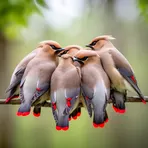
A group of birds called waxwings with soft shiny feathers and red wing tips
Compounds
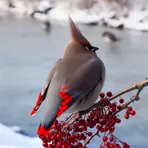

A North American bird with brown feathers, a crest, a black eye mask, and red wing tips that eats berries
Surface Forms
Morphology
Etymology
Waxwing comes from the simple English parts wax and wing because this small songbird has little red, 'wax-like' tips on its wings that look like drops of candle wax. So, a waxwing is a bird named for those red-tipped wings.