
water gas
- noun
- /ˈwɔːtər ɡæs/
- Archaic
- Chemists utilize water gas in various reactions for chemical synthesis.
- water gas shift
- water gas shift reaction
Examples
-
Convection is not required for water gas to rise.
Blog text (10) -
The increasing H2 and CO2 concentration along the reactor height with simultaneous reduction of CO describes the dominance of the water-gas-shift reaction.
Academic text (2018) -
However, it is clear that the water-gas-shift reaction dominates over the gas composition.
Academic text (2018) -
Clean syngas can be converted from CO to H2 using the water-gas shift.
Blog text (32) -
However, due to the fast kinetics of the water-gas-shift reaction, CO is immediately consumed and concentrations drop sharply.
Academic text (2018) -
Does anybody care to do the math to determine the relative contribution to buoyancy in a hot-air balloon of the less dense heated air and the WATER GAS?
Blog text (10) -
The ratio of H2/CO is less than 1 in NMLZ-m under all tested temperatures, which indicates that reverse water-gas shift is involved in DRM under all examined conditions.
Academic text (2018) -
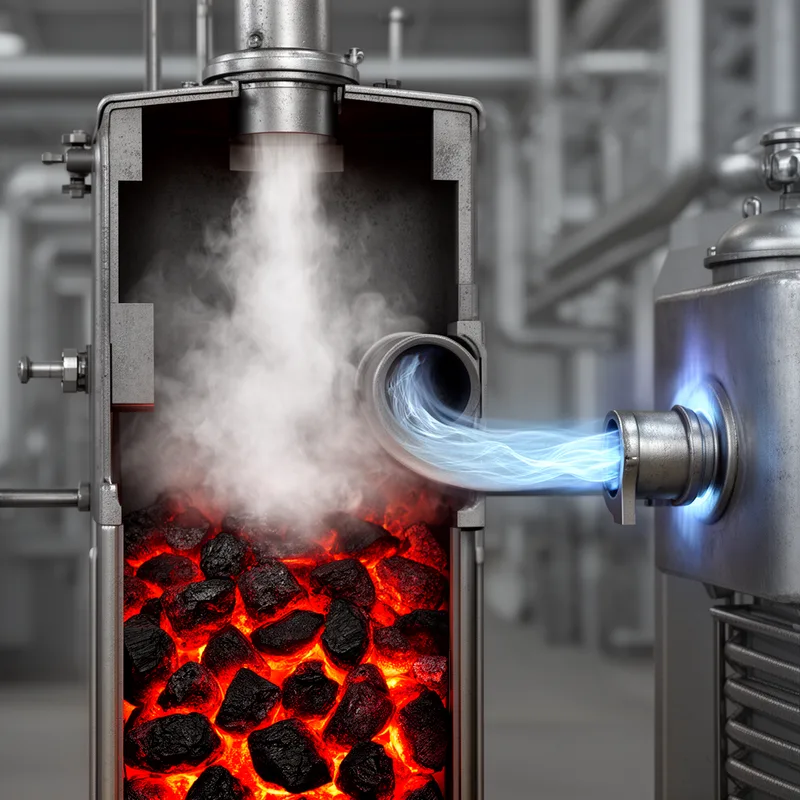
The industrial plant produces water gas by passing steam over heated coal.
-
Water gas is often used as a fuel for heating and cooking.
Surface Forms
Morphology
water + gas
The components 'water' and 'gas' give a clear general clue (a gas related to or produced from water/steam), so a B1 learner could infer it is some kind of gaseous product of water. However, the precise technical meaning — a specific fuel/chemical mixture of hydrogen and carbon monoxide produced by passing steam over hot coal — is specialised and not fully predictable from the parts, making the expression only partially transparent.
Etymology
Water gas gets its name from how it was made: steam, which is hot water, was passed over very hot coal and changed into a gas. That's why water gas now means a fuel gas made from steam and coal.

