
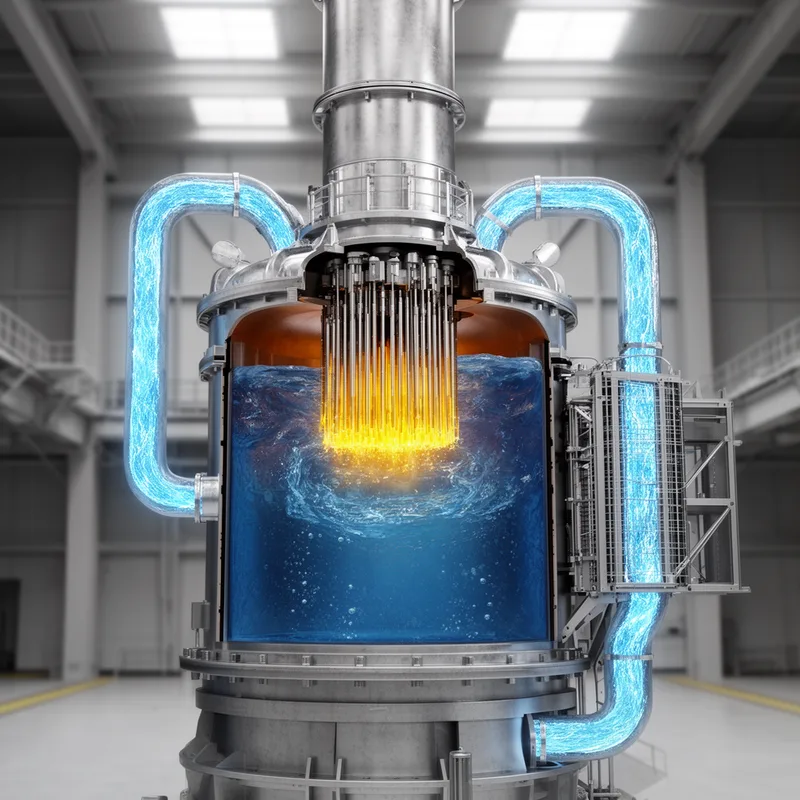
water-cooled reactor
- noun
- Specialized
- Scientists are conducting tests on various designs of water-cooled reactors to improve energy output.
Examples
-
The Hanford B reactor was a graphite-moderated, water-cooled reactor designed to operate at 250 million watts.
Academic text (2005) -
After his death at the age of 88 in 2001, the American Nuclear Society established a Samuel Untermyer Award to recognize pioneering work in the development of safe water-cooled reactors.
Academic text (2007) -
Samuel Untermyer then directed his focus toward the heat transfer of water-cooled reactors.
Academic text (2007) -
A team led by the Westinghouse Corp. pursued the STAR-LW concept, a light-water cooled reactor variant that was the predecessor to the current system known as IRIS.
Academic text (2009) -
He instructed Wigner to design a 500,000-kW water-cooled reactor that would produce 500 g of plutonium per day but would use only 200 tons of uranium, which was very scarce at the time.
Academic text (2002) -
The new power station will utilize a state-of-the-art water-cooled reactor to ensure efficient heat removal.
-
The water-cooled reactor is an essential component in modern nuclear energy production, as it effectively manages the reactor's temperature.
How Cooled
- Specialized

- Specialized
- Specialized
Surface Forms
Morphology
water-cooled + reactor
The phrase is directly compositional: ‘water-cooled’ means cooled by water and combined with ‘reactor’ yields a reactor cooled by water. This adjectival noun compound follows common English technical naming patterns and has clear cross-linguistic equivalents, so a B1 learner who knows the constituent words would readily infer the meaning.
Etymology
The noun water-cooled reactor is named for the simple image of a reactor kept cool by flowing water, with cooled showing the water's job. The water carries heat away from the hot core, so the name means a reactor that uses water 'to remove heat'.

