

warriorism
- noun
- /ˈwɔːrɪərɪzəm/
- By the end of their tour at West Point, two-thirds of graduating cadets revealed high levels of warriorism, and more than nine out of ten believed the military's primary function was the conduct of combat operations.
- warriorism and patriotism
- warriorism among cadets
- level of warriorism
Examples
-
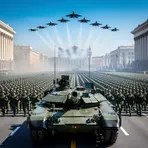
Many cultures celebrate warriorism, emphasizing bravery, honor, and the willingness to fight for one's beliefs.
-
The data show that military socialization (i.e., class status) significantly increased levels of conservatism and warriorism among USMA cadets, but at the same time decreased their support for peacekeeping operations.
Academic text (2001) -
Figure 5 shows that most of the increase can be attributed to an overall increase in warriorism.
Academic text (1997) -
Officers' socialization did not change their warriorism scores.
Academic text (2001) -
Whether or not SAMA students had decided on a military career during or after the end of the Cold War affected only their warriorism scores.
Academic text (2001) -
Seven items measured cadets' level of warriorism (see Table 1).
Academic text (1997) -
In contrast to patriotism, warriorism scores increased steadily over the course of cadets' socialization experience.
Academic text (1997) -
Overall, cadets' degree of warriorism increased significantly, while their scores for patriotism and globalism decreased across the four classes.
Academic text (1997) -
While graduating cadets were strongly committed to warriorism and patriotism, their level of globalism grew weaker over the course of their socialization.
Academic text (1997) -
Overall, cadets showed strong adherence to the patriotism (M=3.9) and warriorism (M=3.6) scales, but relatively weaker adherence to globalism (M=2.8).
Academic text (1997)
Synonyms

 8
8.1
8
8.1

A strong effort to support political or social change that can use force
 8
7.7
8
7.7
A belief that a country should build a strong army and use it to gain or protect power


 1
8.8
1
8.8
A strong, aggressive way of acting to support a cause

Support for using military force in politics

Qualities and skills that help a person fight and protect others

Being a trained fighter who belongs to a group that fights
Antonyms

 6
6.2
6
6.2
The belief that using violence, like fighting or war, is wrong and people should solve problems peacefully
How Militaristic

Surface Forms
Morphology
Etymology
Warriorism comes from warrior (a 'fighter') plus the ending -ism (a 'belief or practice'), so it means a belief in or support for fighters, fighting, or the use of military force.