
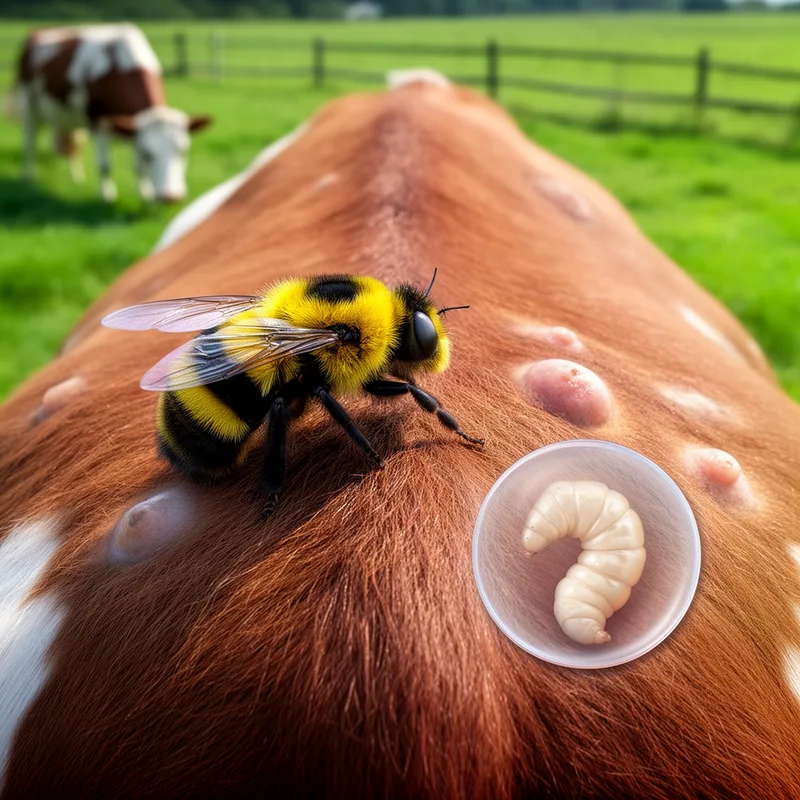
warble fly
- noun
- /ˈwɔrbəl flaɪ/
- Specialized
- Veterinarians recommend treatments for warble flies to ensure the health of cattle.
Examples
-
The rancher noticed several cattle had lumps under their skin caused by warble flies.
-
Most believed the numbers had not increased, with the exception of Kamaks (warble flies) they noticed on caribou in greater numbers.
Academic text (2007) -
They wintered in the foothills; then in late spring, herds moved toward the Arctic coast, where they remained through the summer in order to seek relief from warble flies and other insects that is provided by ocean breezes.
Academic text (2007) -
Farmers must manage warble flies to protect their livestock from painful skin infestations.
Synonyms
 1
9.9
1
9.9

A large hairy fly whose larvae grow under the skin of mammals and cause pain


 1
9.9
1
9.9
Large flies whose larvae live under the skin of cattle and cause swellings
A group of large flies whose young live under the skin of animals like cows and make lumps

A group of flies whose young live inside animals such as cows and horses and harm them

A large fly whose young live under the skin of mammals such as humans and cattle
Surface Forms
Morphology
The compound is directly compositional: 'warble' (a swelling under the skin caused by larvae) modifies 'fly' (an insect), so a listener can infer it denotes a fly associated with warbles or whose larvae cause such swellings. This follows common English noun+noun naming patterns for pests (e.g. housefly, horsefly), making the meaning predictable to a learner who knows both constituent words.
Etymology
Warble fly is named for the small warbles, the lumpy bumps its young make under an animal's skin, and it is a hairy, bee-like fly. So the name helps you remember that warble fly means the fly whose young live under cattle skin and cause those painful lumps.