
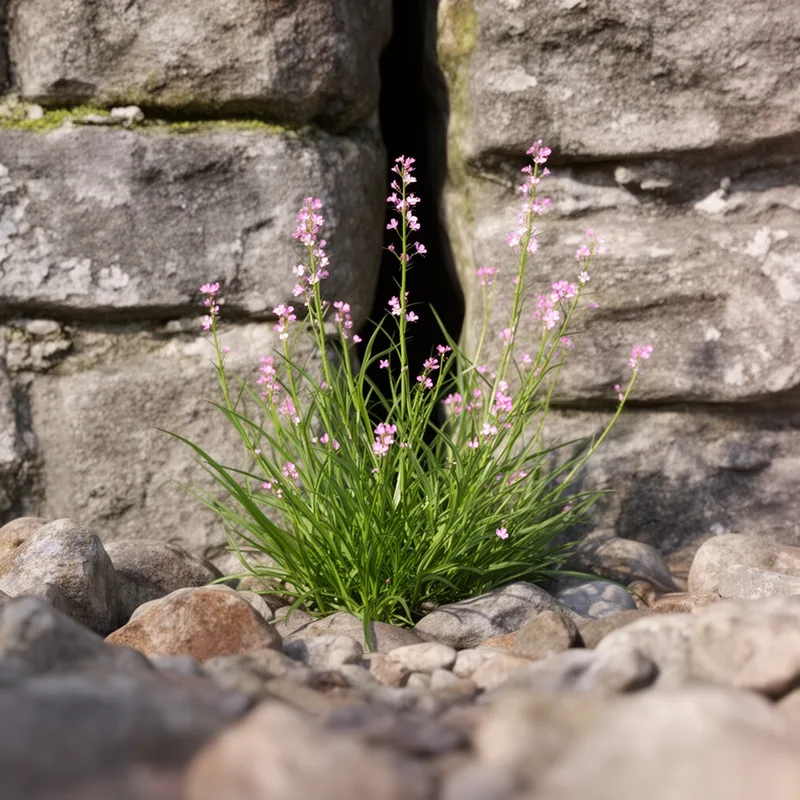
wall pellitory
- noun
- Specialized
- The old stone fence was covered in wall pellitory thriving between the cracks.
Examples
-
Gardeners often remove wall pellitory because it spreads quickly in rocky areas.
-
I spotted a wall pellitory growing on the ancient ruins.
-
We noticed wall pellitory growing along the abandoned building’s walls.
-
The wall pellitory thrives in rocky environments.
-
The old stone fence was covered in wall pellitory thriving between the cracks.
-
We noticed wall pellitory growing along the abandoned building’s walls.
-
I spotted a wall pellitory growing on the ancient ruins.
Synonyms

A small plant with narrow leaves and tiny pink flowers that grows in cracks in walls
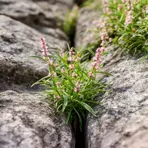
A small plant with long narrow leaves and tiny pink petalless flowers that grows in rocky crevices
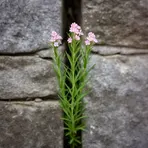
A small plant that grows in wall cracks with narrow leaves and tiny pink flowers
How Big


Surface Forms
Morphology
The noun phrase is directly compositional: 'wall' functions as a locative modifier for 'pellitory', so its meaning is simply a pellitory plant that grows on walls or in wall crevices. Noun–noun compounding with locative specification is a common and transparent pattern cross-linguistically, so a B1 learner who knows the constituents would readily infer the MWE's meaning.
Etymology
Wall pellitory comes from the plant's habit of growing in cracks on old walls and rocks. People put wall together with pellitory to show where this plant is found, so the name means 'a plant that grows on walls'.