
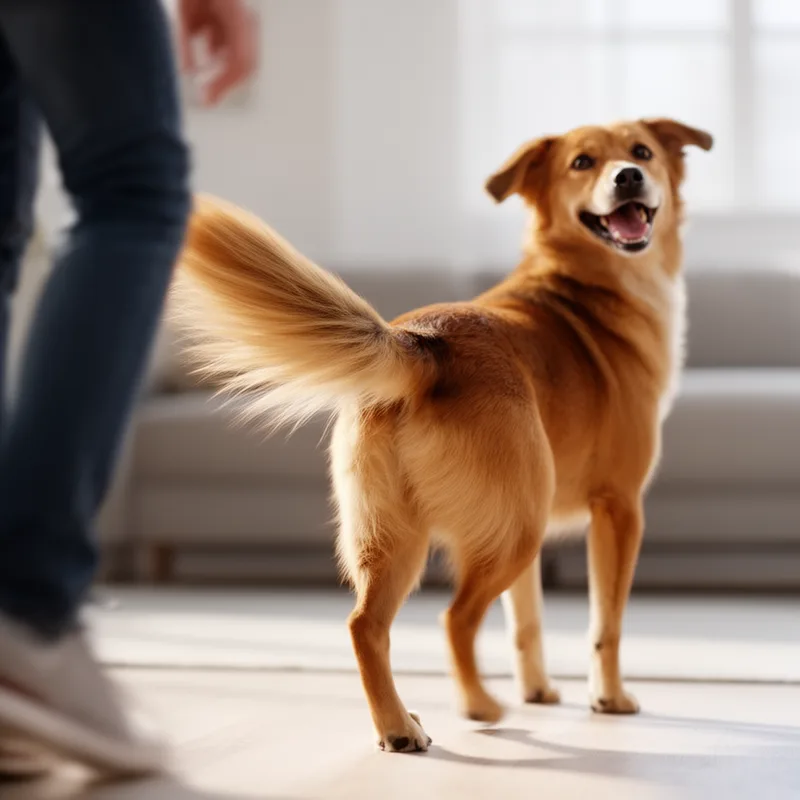
wagging tail
 1
1.0
1
1.0

- noun
- When I walked into the dog park, I was welcomed by a chorus of wagging tails and happy barks.
Loading YouTube…
Watch on YouTubeSo let's take off our dog colored glasses and let's put on our cat glasses the wagging tail.
- So let's take off our dog colored glasses and let's put on our cat glasses the wagging tail.
Examples
-
Then, one day, a not-so-subtle neighbor took one look at Heather in the elevator and, without so much as acknowledging the wildly wagging tail and the happy-go-lucky face staring up at him, he said: "Man, she's a big one, huh?"
Blog text (20) -
Hansen always showed up with a wagging tail, ready to work.
Blog text (12) -
Surely a wagging tail is a sign of a happy dog, so why not include appropriate attention to other values that add to the happiness of learning music?
Academic text (1999) -
Hevak watched their wagging tails as they loped through the crowd toward the nearest exit.
Fiction book (1995) -
We have always had cats in the house, but Lucy is the first kitten we have had that greets us at the door with a wagging tail.
Blog text (28) -
Seeing a dog with a wagging tail always makes me smile, as it shows they are excited to see me.
-
A wagging tail is a sure sign that the dog is feeling playful and friendly.
Synonyms
 37
1.0
37
1.0
A small, quick movement from side to side or up and down
 3
4.9
3
4.9
A small repeated movement from side to side or up and down
 2
4.7
2
4.7
A small twisting movement of the body to get free
Surface Forms
Morphology
The meaning is directly and transparently derived from 'wag' (to move repeatedly) and 'tail' (the animal's rear appendage): a 'wagging tail' is simply a tail that is moving. This is a regular participial noun phrase pattern common across languages and follows standard English composition, so a B1 learner who knows the constituents will readily understand it.
Etymology
Wagging tail comes from the simple picture of a dog moving its tail side to side when it is happy. To wag means to move the tail, so a wagging tail shows the dog is 'happy' or 'excited'.