
vulnificus
 1
9.9
1
9.9

- noun
- /ˌvʌlnɪˈfɪkəs/
- Specialized
- Despite the implementation of these updated regulations, oyster-associated V. vulnificus infections and deaths continued.
- vulnificus infection
- V. vulnificus
- Vibrio vulnificus
Examples
-
Mortality rates for those who acquire a V. vulnificus infection exceed 50 percent, with rapid disease onset and death often within 3-4 days.
Academic text (2005) -
During 1991-2010, California reported 88 patients with V. vulnificus infection.
Academic text (2013) -
Assess the outcome of infection with V. vulnificus.
Academic text (2015) -
In this study, approximately half of the patients with V. vulnificus infection died, and death occurred 72 hours after hospital admission.
Academic text (2015) -
Doctors say he was infected by a bacteria called Vibrio vulnificus.
-
Distinguish significant prognostic factors among patients infected with V. vulnificus.
Academic text (2015) -
Deaths from V. vulnificus continue to occur among immunocompromised oyster consumers.
Academic text (2005) -
Persons at risk for severe V. vulnificus disease are those with preexisting liver disease, alcoholism, diabetes, hemochromatosis, or an immunocompromising condition.
Academic text (2013) -
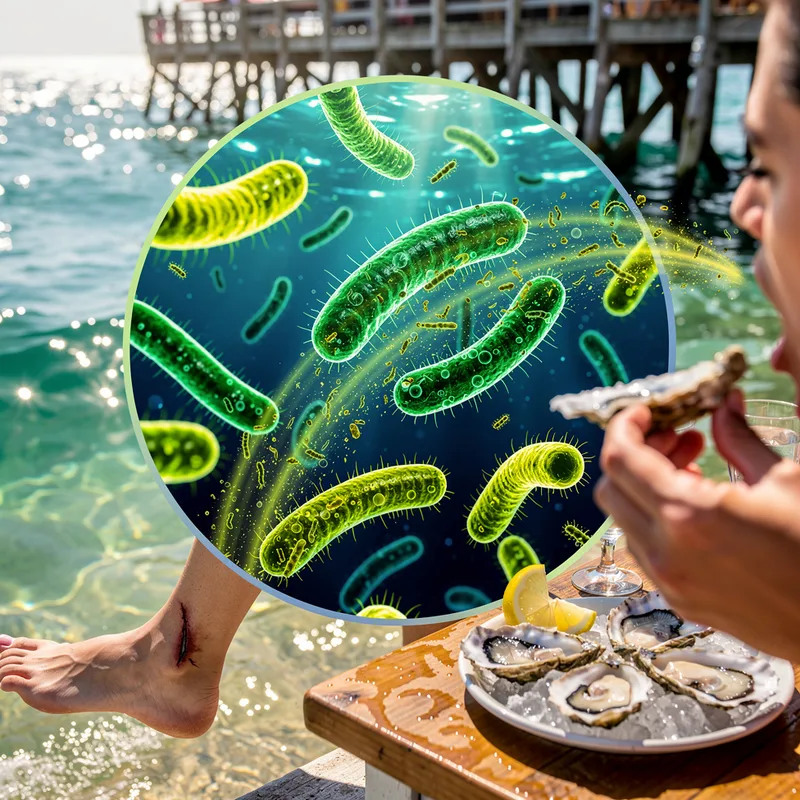
Vibrio vulnificus can lead to severe infections for those who consume raw oysters.
-
Health officials warn that exposure to vulnificus bacteria can be deadly for individuals with weakened immune systems.
Surface Forms
Etymology
Vulnificus as the name for the sea bacterium comes from Latin vulnus 'wound' plus -ficus 'making', so the name once meant 'wound-maker'. That explains why vulnificus bacteria are known for causing serious infections from wounds or from eating raw seafood.