
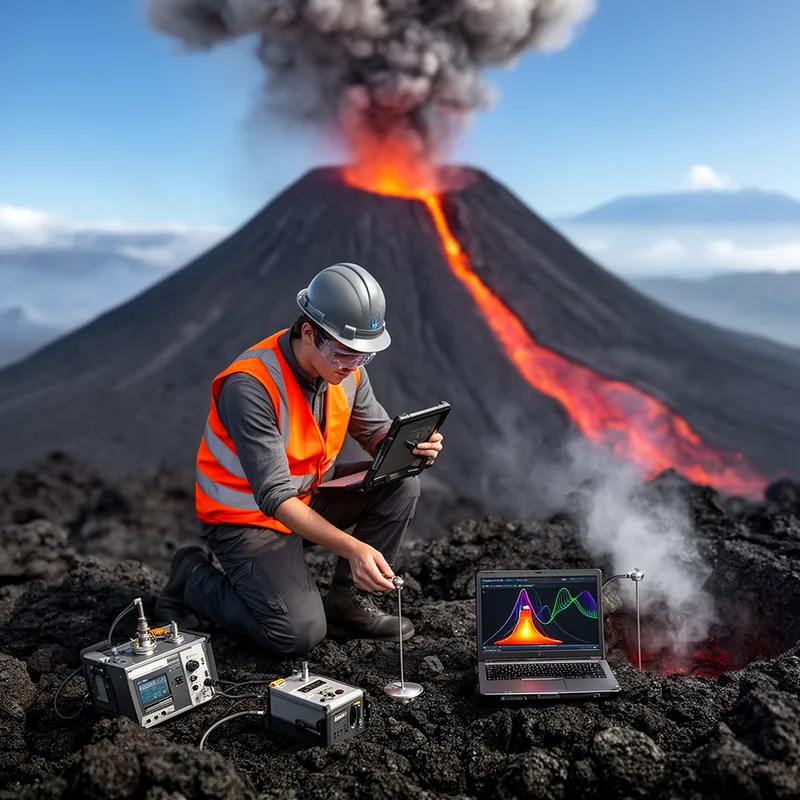
vulcanology
- noun
- /ˌvʌl.kəˈnɑː.lə.dʒi/
- Specialized
- Scientists who specialize in vulcanology often conduct fieldwork in volcanic regions.
Examples
-
Students studying vulcanology learn about the formation and behavior of volcanoes.
-
The research paper focused on recent advances in vulcanology and their implications for disaster preparedness.
-
In the academic realm, active and returned missionaries played roles in the founding of area studies programs, in the development of social and natural sciences (including vulcanology!), and in the establishment of institutes and colleges such as the Harvard-Yenching Institute and the American University of Beirut.
Academic text (2003)
Synonyms
 2
6.9

The study of volcanoes, lava, and underground molten rock
How Specialized
- Specialized

- Specialized
46
3.5
Surface Forms
Morphology
Etymology
Vulcanology comes from Vulcan, the Roman god of 'fire', and the ending -ology, which means 'study of'. So, vulcanology is the 'study of' volcanoes, which makes sense because volcanoes are places of hot fire and lava.