
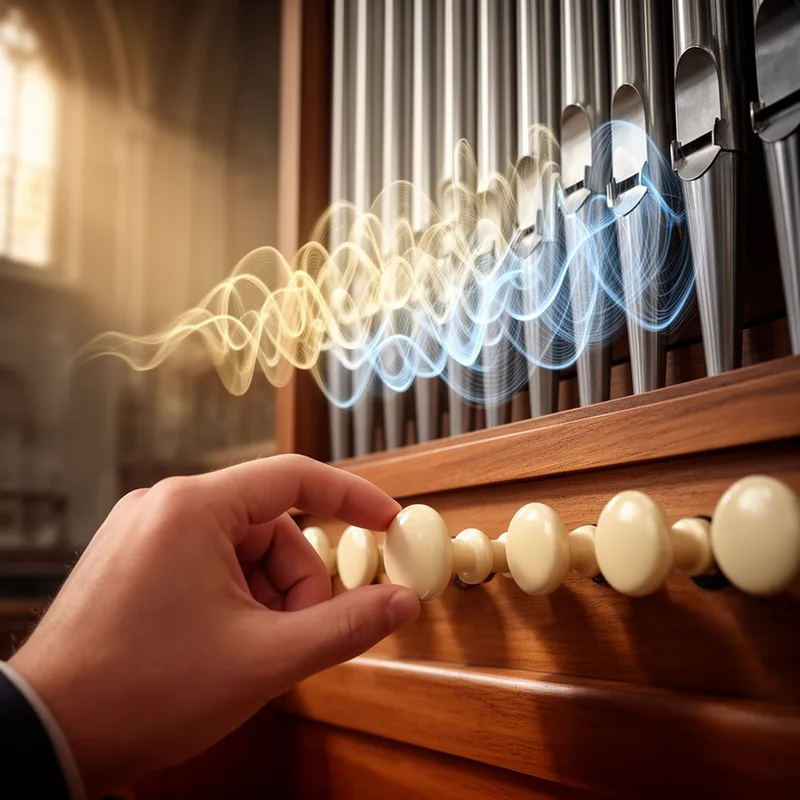
vox angelica
- noun
- /vɒks ænˈdʒɛlɪkə/
- Specialized
- The organist selected the vox angelica stop to add a gentle, ethereal quality to the music.
Examples
-
Many church organs include a vox angelica for pieces requiring a delicate, voice-like effect.
-
Can you hear the vox angelica in that piece?
-
Her favorite part of the recital was when the vox angelica created a soft, trembling melody.
-
The organist selected the vox angelica stop for a soothing melody.
-
Her favorite part of the recital was when the vox angelica created a soft, trembling melody.
-
Many church organs include a vox angelica for pieces requiring a delicate, voice-like effect.
-
The organist selected the vox angelica stop to add a gentle, ethereal quality to the music.
Surface Forms
Morphology
This is a Latin-derived technical term for a specific organ stop; knowing 'vox' (voice) and 'angelica' (given here as a plant, and superficially similar to 'angelic') does not allow a B1 learner to infer the specialized sense ‘organ stop producing a gentle, voice-like tremolo’. The phrase is domain-specific and its intended meaning (a particular organ registration/effect) is not transparently compositional from the provided constituent meanings, so it would be unpredictable to learners.
Etymology
Vox angelica comes from the Latin words vox ('voice') and angelica ('angel-like'), and it names a part of the organ built to sound like angels singing. So when an organist uses the vox angelica, it makes a soft, trembling, 'voice-like' sound, which is why the name means a gentle 'voice of angels'.

