

vitreous body


 1
8.6
1
8.6
- noun
- /ˈvɪtriəs ˈbɑdi/
- Specialized
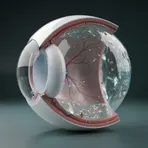
- The vitreous body maintains the shape of the eye and helps it retain its structure.
Examples
-
The vitreous body was diffusely tinged with blood.
Academic text (2006) -
During the surgery, the doctor carefully removed the damaged vitreous body from the patient's eye.
-
As we age, the vitreous body may become less gel-like and can cause vision problems.
Synonyms
 1
7.3
1
7.3
A clear jelly that fills the space between the lens and the back of the eye
Surface Forms
Morphology
The meaning is directly compositional: 'vitreous' conveys a glass-like/transparent quality (here relating to the eye) and 'body' indicates a physical structure, so together they denote the glassy/transparent gel-like structure in the eye. Although 'vitreous' is somewhat technical, the adjective+noun combination follows standard English composition and mirrors equivalent terms in other languages, so a learner who knows both constituents can infer the MWE meaning.
Etymology
Vitreous body comes from vitreous, a word meaning 'glass', because the clear jelly in the eye looked like glass to early doctors. So today vitreous body means the clear, glass-like gel that fills the inside of the eye.