

visual sense


 1
3.2
1
3.2
- noun
- /ˈvɪʒuəl sɛns/
- One object should be placed on a solid-color background; adding lights, other colors, and variety to the environment will only confuse the visual sense, and the object will not be seen.
Loading YouTube…
Watch on YouTubeReal estate is taken up by the visual sense than any other sense, more than taste, touch, smell, right?
- Real estate is taken up by the visual sense than any other sense, more than taste, touch, smell, right?
- So the the visual sense has always been with me.
Examples
-
Children use their visual sense to learn by observing the world around them.
-
Consequently, typical visual enrichment strategies do not work with children who have CVI because the visual sense is overwhelmed by the visual information.
Academic text (1997) -
So the the visual sense has always been with me.
-
I bet you have a wonderful visual sense.
-
He also had a precise visual sense.
Academic text (2011) -
McAteer and Shaw (1995) found that e-learning is more effective when more senses are engaged; that is, when both the cortical and visual senses are engaged, deeper and more meaningful learning can take place.
Academic text (2008) -
In drawing conclusions about the vagueness and obscurity of foggy conditions, most commentators have focused solely on the visual sense, and yet what we witness here is overwhelming affective clarity.
Academic text (2018) -
Since learning occurs primarily through the visual sense (Warren, 1994), children who are visually impaired do not have access to the same kind and amount of incidental information as sighted children and must learn about their world through their remaining senses and residual vision (if any).
Academic text (1997) -
People often rely on their visual sense to navigate through unfamiliar environments.
-
A strong visual sense allows artists to capture the beauty of their surroundings.
Synonyms
 538
1.0
538
1.0
The ability to see or an impressive thing you see
 263
1.0
263
1.0
The ability to see
 54
1.0
54
1.0
How well you can see with your eyes

The ability to use your eyes to notice things

The ability to see and understand what you look at
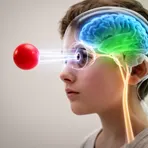
The sense of seeing and how the eyes send messages to the brain
Antonyms
 70
3.1
70
3.1
A condition in which a person cannot see because of injury, disease, or being born that way
How Clear
 1
3.2
1
3.2
Surface Forms
Morphology
The meaning 'the ability to perceive by sight' follows directly from combining 'visual' (related to sight) with 'sense' (a perceptual faculty). This adjective+noun composition is a transparent, cross-linguistically common pattern, so a B1 learner who knows the constituents would readily infer the MWE's meaning.
Etymology
The phrase visual sense comes from the simple image of your visual ability and your sense of sight working together, where your eyes 'see' and give information to your brain. That's why it means the ability to 'see'.