
virtual memory


 1
4.2
1
4.2
- noun
- /ˈvɜrʧuəl ˈmɛməri/
- Specialized
 :
memoria virtual
:
memoria virtual
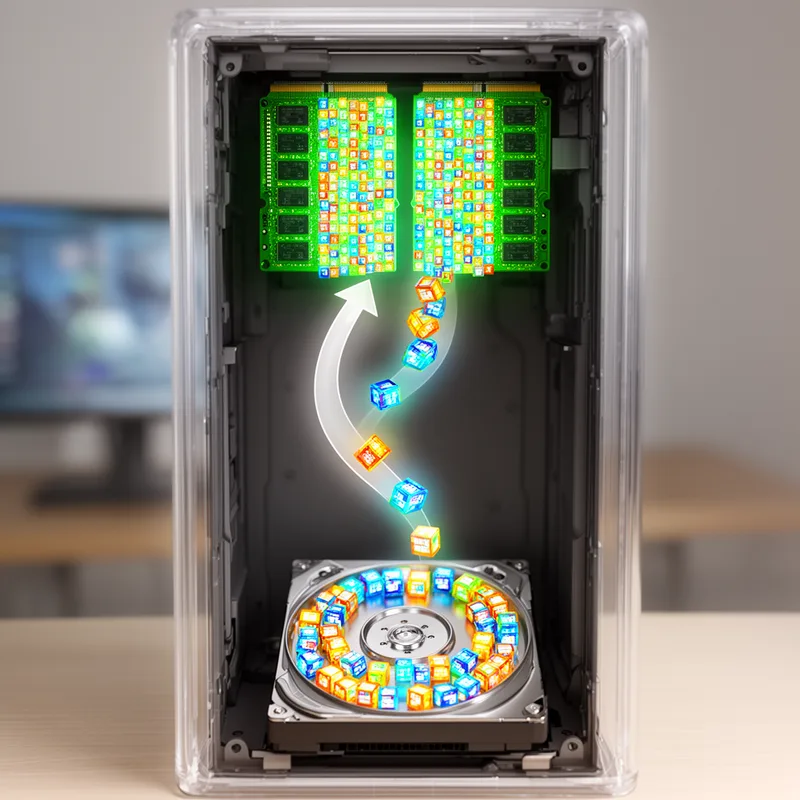
- The computer uses virtual memory to simulate additional memory when the physical RAM is full.
- virtual memory settings
- the use of virtual memory
Examples
-
So this is how our virtual memory address space is laid out.
-
A traditional operating system would create new virtual memory address spaces to protect applications from each other.
Academic text (2011) -
I expanded my virtual memory and added plenty of RAM.
-
You also get alerts for the virtual memory; that memory that is being managed by the SQL Server service.
Blog text (29) -
If you are going to tweak your virtual memory, then I would recommend setting the min/max values to 2.5-3X the amount of installed RAM.
Blog text (34) -
By adjusting the settings, I increased my virtual memory to help run more applications simultaneously.
-
When programs need more memory than is installed, the system relies on virtual memory to function properly.
Synonyms

Part of a computer's disk used like extra memory when the computer's memory is full

A part of the hard drive used as extra memory when computer memory is full
How Simulated
- Specialized
1
4.2

- Specialized
Surface Forms
Morphology
Learners who know 'virtual' (not real; simulated) and 'memory' (computer memory) can infer that 'virtual memory' refers to memory that is not physically present but simulated, so the core sense is compositional. However, the precise technical meaning — that disk space is used to extend RAM via paging/swapping — requires specific computing knowledge beyond B1, so the expression is not fully predictable from the parts.
Etymology
Virtual memory comes from a simple picture: the computer uses part of the hard disk as an extra, pretend memory space. When the computer moves data there so programs can use more 'memory' than is really inside the machine, the name shows it is a 'virtual' or made-up memory.