
vinblastine


 1
8.6
- noun
- /vɪnˈblæstiːn/
- Specialized
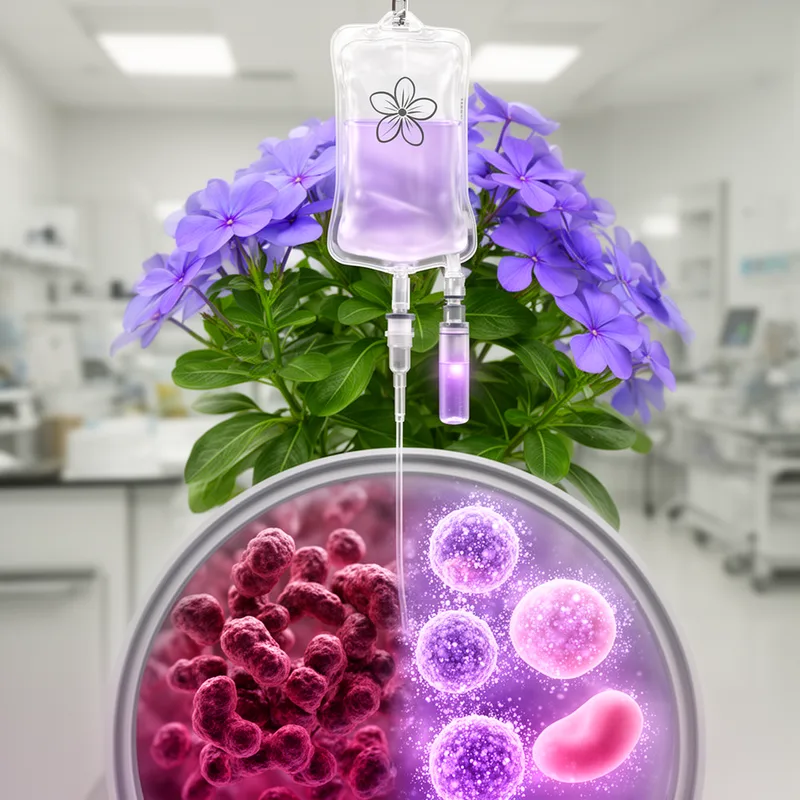
- In the 1950s, scientists from the pharmaceutical manufacturer Eli Lilly & Co. discovered the rosy periwinkle, a plant from which they were able to derive compounds leading to the development of anticancer agents vincristine and vinblastine.
- vinblastine and vincristine
Examples
-
Chemotherapy with vinblastine, the fluoropyrimidines, and even the newer cytotoxics has not been as successful in treating renal carcinoma as it has been in treating other solid tumors.
Academic text (2001) -
Eli Lilly & Co., which developed vincristine and vinblastine, relied initially on several source countries for its rosy periwinkle supply.
Academic text (1997) -
Today, Eli Lilly's annual sales from vincristine and vinblastine exceed $180 million.
Academic text (1997) -
ABVD = Adriamycin, Bleomycin, Vinblastine, Dacarbazine.
Blog text (18) -
The small oral lesions may be treated with surgical debulking, intralesional vinblastine, or sclerosing solutions.
Academic text (2000) -
With a steady supply of high-quality plants, Eli Lilly consistently earned over $100 million annually from vincristine and vinblastine.
Academic text (1997) -
Vinblastine is commonly used in chemotherapy to treat various types of cancer.
-
Doctors prescribe vinblastine to inhibit cell division in cancer patients.
-
The oncologist explained that vinblastine works by slowing down the growth of cancer cells.
Synonyms
A medicine used to treat cancer that stops fast-growing cells from dividing
Surface Forms
Etymology
The word vinblastine comes from the plant name Vinca ('periwinkle') and the part blastine, which suggests action on 'blast' or fast-growing cells. So it is a medicine made from the periwinkle plant that stops cells dividing, which is why doctors use it to treat cancer.