
vesicular


 1
8.5
1
8.5
- adjective
- /vəˈsɪkjələr/
- Specialized
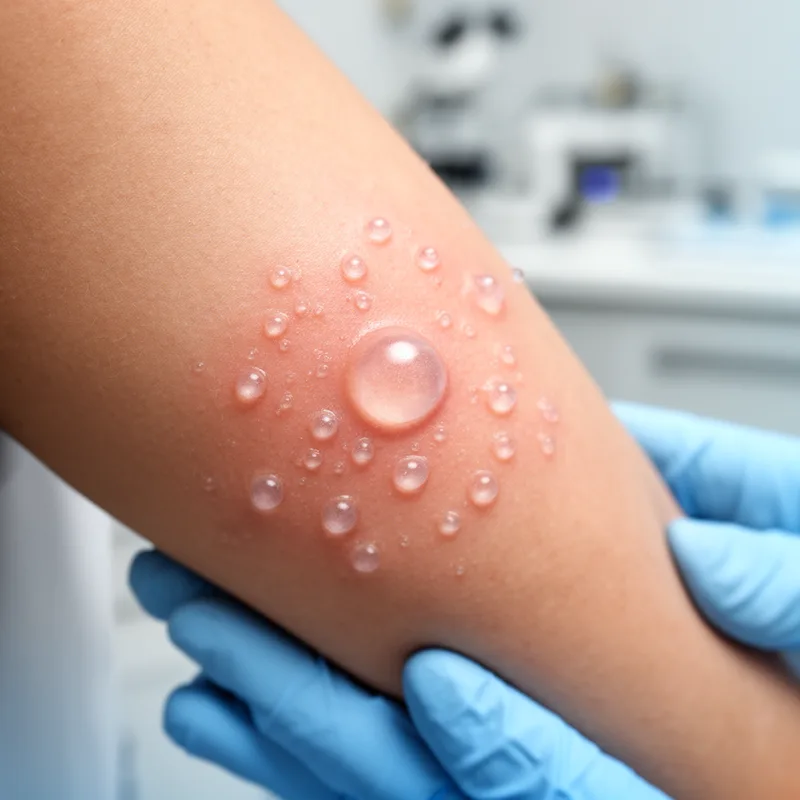
- The patient had vesicular lesions on his skin, which indicated a viral infection.
- vesicular stomatitis
- vesicular lesions
- vesicular disease
Examples
-
Her body is covered with the fine red vesicular rash of end-stage Motaba.
Fiction book (1995) -
Large vesicular tumor cell nuclei were also seen with prominent eosinophilic nuclei.
Academic text (1996) -
The mummy had vesicular cutaneous lesions distributed in a pattern characteristic of smallpox.
Academic text (2014) -
The patient had to have one or more papular, vesicular, or crusted lesions for a clinical diagnosis of recurrence.
Academic text (1991) -
The encoded protein is an abundant integral membrane protein of cholinergic synaptic vesicles and is thought to be involved in vesicular transport.
Academic text (2016) -
The mummy had vesicular cutaneous lesions that were characteristic of smallpox.
-
In scoria or vesicular basalt, the bubbles are larger, often resembling pea-sized pockets.
Synonyms

Relating to small bags inside a cell that store water or food
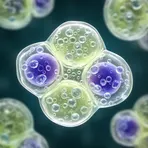
Having small spaces filled with fluid inside cells
Compounds
- Specialized
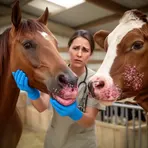
A viral illness in animals like horses and cows that makes blisters in the mouth and on the skin
Surface Forms
Morphology
Etymology
Vesicular comes from the Latin vesicula, which means 'little bladder' and is related to vesica, 'bladder'. So, vesicular describes something with small sac- or blister-like parts in the body, like tiny bubbles in the lungs or blisters on the skin.