
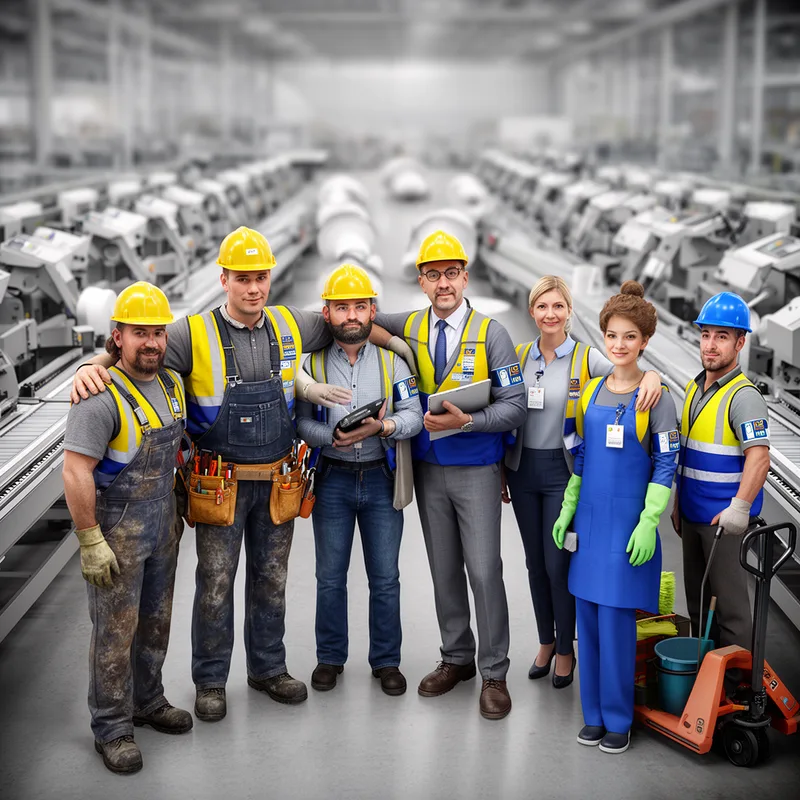
vertical union
- noun
- /ˈvɜrtɪkəl ˈjunɪn/
- Jargon
- The vertical union included all employees at the plant, from machine operators to office staff.
Examples
-
In contrast to craft unions, a vertical union seeks to unite everyone in the same industry.
-
The rise of vertical unions in the early 20th century changed the structure of labor movements.
-
The vertical union represents workers from various sectors.
-
Many employees joined a vertical union for better representation.
-
A vertical union aims to bring together all types of workers within a single industry, fostering solidarity among them.
-
In a vertical union, members from different job roles within the same industry collaborate to negotiate better working conditions.
-
The vertical union was formed to ensure that all workers in the manufacturing sector had a unified voice.
Synonyms

 1
3.7
1
3.7

A group of workers in one industry who join to talk with employers about pay and conditions for every worker
How Inclusive

Surface Forms
Morphology
Although 'union' is clear, the sense of 'vertical' here is a technical, industry-specific use (relating to integration across production stages) that a B1 learner who only knows the basic meaning 'up–down' would not reliably map onto 'organizes workers across different jobs or stages'. The compound therefore gives a partial compositional clue (vertical = across levels), but understanding the full institutional meaning requires domain knowledge, so it is only partially predictable.
Etymology
Vertical union may come from the image of a tall building: vertical means up-and-down and union means joining people, so the idea is a group that reaches every floor and job. That's why vertical union means a union that organizes 'all workers' in an industry, not just one craft.