
vernacularization
- noun
- /vərˌnækjʊləraɪˈzeɪʃən/
- Specialized
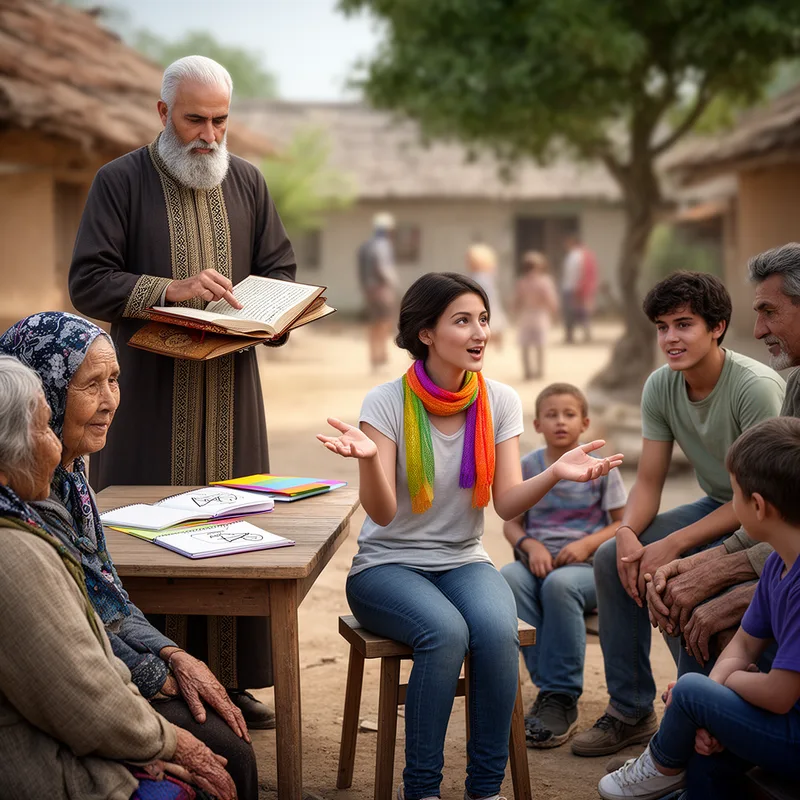
- The vernacularization of educational materials has made learning more accessible to local communities.
Examples
-
A reader familiar with Iraqi vernacular poetry, especially the folkloric part of it, can easily appreciate Yusuf's experimentation with the vernacularization of standard Arabic.
Academic text (1997) -
The use of conspiracy theorizing by state and Islamist forces in the process of out-legitimation has encouraged a widespread vernacularization of this communicative practice, which doubts and blurs the official media presentations of the war.
Academic text (2002) -
Thus, the pendulum of Turkish politics swings back and forth between democratization (or the vernacularization of politics) and military intervention.
Academic text (2000) -
These are all expressions of this process of vernacularization of the rhythms, tensions, and narrative conventions which can happen in Africa only in comics, a low-cost medium that is easy to serialize.
Academic text (2007) -
Many activists support the vernacularization of public speaking to engage everyday people in important discussions.
-
The artist's work emphasizes the vernacularization of traditional stories, making them relatable to modern audiences.
Synonyms

 4
4.1

Changing a product so it fits the language and ways of people in a country
Antonyms


How Accessible
- US
1
3.8

- Specialized
50
3.7
8
4.8
- US
1
6.7
Surface Forms
Morphology
vernacularization = vernacularize (transparent) = vernacular + ize + ation
The noun is formed by nominalizing the verb 'vernacularize' with the productive suffix '-ation', yielding 'the process of making something vernacular'.
Etymology
The word vernacularization comes from vernacular, from a Latin word meaning 'home' or 'native', and the ending -ization means 'making'. So, vernacularization is making language or ideas into the everyday, local speech of people so they are easier to understand.