
vernacular art
- noun
- /vərˈnækjələr ɑrt/
- Specialized
- These expressions of vernacular art not only promote community pride, cooperation, and stability but also signal the presence of a particular ethnic substrate within the larger urban center (Ford and Griffin 1981; Hayden 1997).
Examples
-
The community organized an exhibition to showcase their local vernacular art, which reflected their unique traditions and history.
-
Some forms of vernacular art may be more sexually explicit than court art.
Academic text (1993) -
Gilbert's texts celebrate the talent of a man who truly loved his vernacular art but did not debase or demean these accomplishments.
Academic text (2000) -
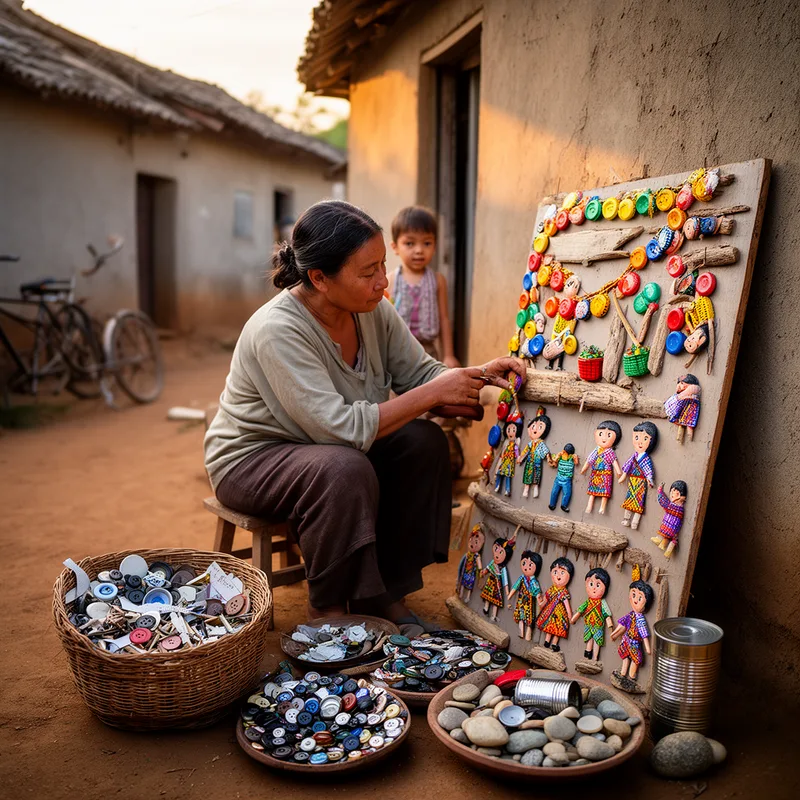
Many residents took pride in creating vernacular art, using skills passed down through generations without formal training.
-
During the festival, we saw various pieces of vernacular art that depicted everyday life in our town, made by local artists.
Synonyms

 7
3.9
7
3.9

Art that people in a community make to show their traditional skills and customs like cloth or carvings
 2
7.2
2
7.2
Creative work made by self-taught people outside the normal art world


 1
6.7
1
6.7
Work made by people without formal art training in a simple, direct style

Work that people make without formal art training like paintings or sculptures

Art made by people without formal training that looks simple and childlike, often with bright colors
Antonyms

How Recognized
20
4.1
 7
3.9
7
3.9
- Specialized
- Specialized
2
7.2
Surface Forms
Morphology
A learner who knows 'vernacular' as 'local/common speech or style' and 'art' can infer that 'vernacular art' refers to art produced in local or everyday traditions rather than institutional or academic art. However, the additional nuances — that it is often made by self-taught or untrained makers and not formally recognized — are cultural/disciplinary details not fully predictable from the words alone, so the phrase is only partially transparent.
Etymology
Vernacular art comes from a word that meant 'home' or 'local speech', so it paints a picture of things made in everyday life. So vernacular art means art made by ordinary local people, often 'self-taught' and using everyday materials rather than by trained artists.