
ventrally
- adverb
- /ˈvɛntrəli/
- Specialized
- The turtle's limbs extend ventrally as it moves across the sandy beach.
Examples
-
The chorda tympani nerve comes off rostrally, courses ventrally to the first pharyngeal pouch, and enters the mandibular arch.
Academic text (2003) -
The most important difference, from our perspective, is that Tritonia flexes dorsally and ventrally, while Melibe flexes its body laterally, from side to side. See illustrations on pages 38-39.
Academic text (2009) -
Another portion courses ventrally, terminating deep to the platysma myoblastic lamina.
Academic text (2003) -
They're migrating dorsally into the skin and ventrally where they're going to form the ganglia of the peripheral nervous system.
-
Generally, the amniote ribs grow ventrally into the lateral body wall, whereas in the turtle, they are arrested in the axial part (ax), growing toward the CR.
Blog text (15) -
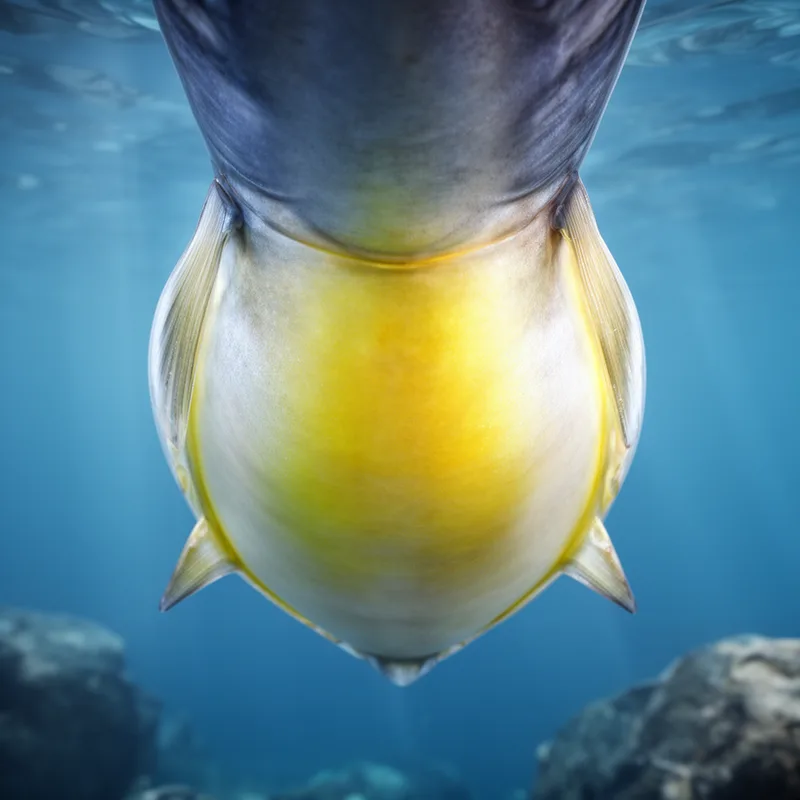
The fish swims ventrally, showing its belly to the sunlight.
-
In many mammals, the heart is located ventrally to the lungs.
Synonyms
 1
8.2
1
8.2

Toward the front of the body or a body part
 1
5.8
1
5.8
From the side that faces another person or thing
Surface Forms
Morphology
Etymology
Ventrally comes from the Latin root venter, which means 'belly'. You can see the same root in ventral and ventriloquist, so ventrally means 'towards the belly' or the front side of an animal.