
venous blood


 1
3.9
1
3.9
- noun
- /ˈviːnəs blʌd/
- Specialized
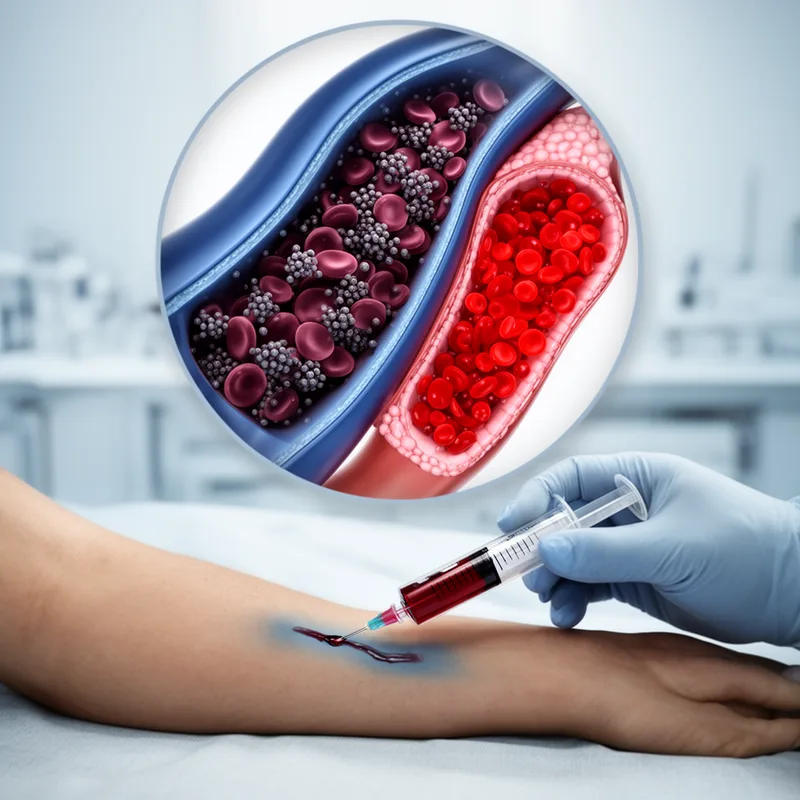
- From each enrolled person, 10 mL of venous blood was collected.
- venous blood was collected
- venous blood sample
- venous blood draw
Examples
-
They were volunteers and people who had venous blood taken for routine hematological tests.
Academic text (1999) -
In the second trimester of each expectant mother, maternal venous blood was collected in trace element-free tubes and frozen.
Academic text (2016) -
The study began early in 1991, and venous blood was collected from 413 participants.
Academic text (1993) -
If our heart doesn't get venous blood from the body, it won't have blood to give clean blood to the body.
-
Morning venous blood samples were collected for the study of various parameters and taken in EDTA containers.
Academic text (2007) -
By contrast, after the oxygen has been released (oxygen-hemoglobin disassociation), venous blood is significantly less saturated (40%).
Academic text (2003) -
A venous blood sample collected into EDTA was taken for measurement of IgG against CHIKV, DENV, and RVFV.
Academic text (2012) -
Serum samples (3-5 mL venous blood) were obtained before each vaccination and one month after the third vaccination (i.e., age of 7 months).
Academic text (1996) -
Venous blood is only a little (pH 0.02 or thereabouts) more acidic than arterial blood.
Blog text (7) -
A venous blood sample was required for the laboratory tests to measure cholesterol and glucose levels.
How Oxygenated
- Specialized
3
3.9

- Specialized
1
3.9
Surface Forms
Morphology
The meaning 'blood that flows through the veins' is directly and compositionally derived from combining 'venous' (associated with veins) with 'blood' (the bodily fluid). This adjective+noun pattern is literal and cross-linguistically common (e.g. Spanish 'sangre venosa'), so a learner who knows both constituents can readily infer the MWE's meaning.
Etymology
Venous blood literally names the blood in the body's veins. Veins are tubes that carry blood 'back to the heart', so this blood usually has less oxygen and more waste than the blood in arteries. That's why venous blood means the darker, returning blood with less oxygen.