
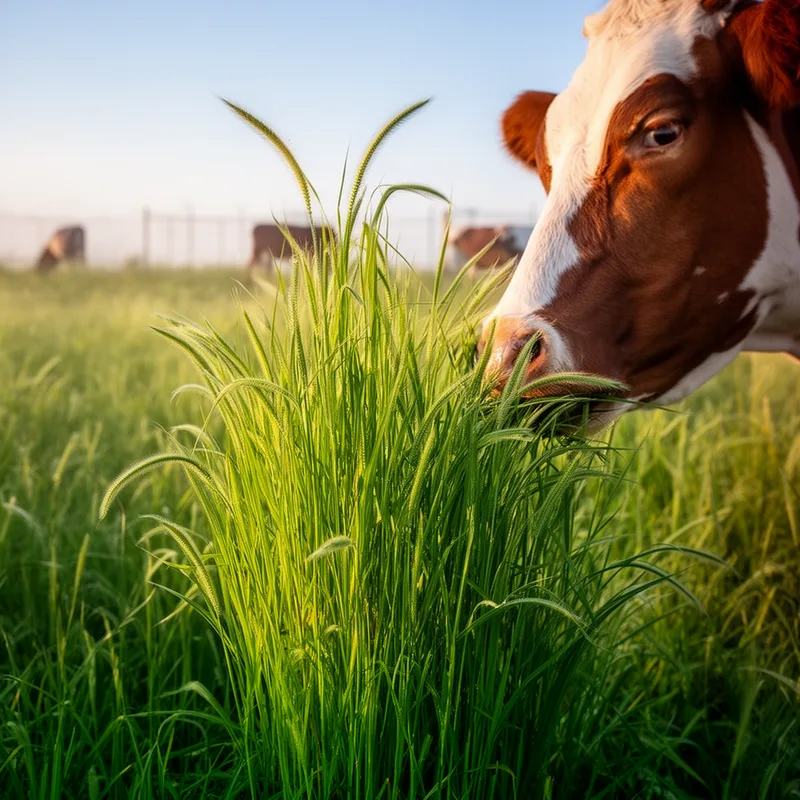
velvet grass
- noun
- Specialized
- Farmers often plant velvet grasses for livestock.
Examples
-
She picked a handful of velvet grass to examine the unique texture of its stem.
-
The field was covered in soft velvet grass that shimmered in the morning light.
-
Farmers often use velvet grass as forage for their livestock.
-
The velvet grass swayed gently in the breeze.
-
The meadow was covered in lush velvet grass that felt soft underfoot as we walked through it.
-
Farmers use velvet grass as a nutritious forage for livestock, benefiting from its rich growth.
-
In spring, the fields were vibrant with blooming flowers surrounded by velvet grass swaying gently in the breeze.
Synonyms

A tall grass with soft stems from Europe often used to feed cows

A tall grass from Europe with soft stems used to feed animals
Surface Forms
Morphology
The phrase is a compositional descriptive noun: 'velvet' (soft, smooth) combined with 'grass' naturally yields 'a grass with velvety texture.' This is a transparent, literal modifier-head construction common across languages, so a B1 learner who knows both constituents can infer the meaning.
Etymology
The name velvet grass comes from the soft, velvet-like feel of the plant's stems. Because the stems feel like velvet, people called it velvet grass, and that image helps you remember it is a soft grass often used as food for animals.

