
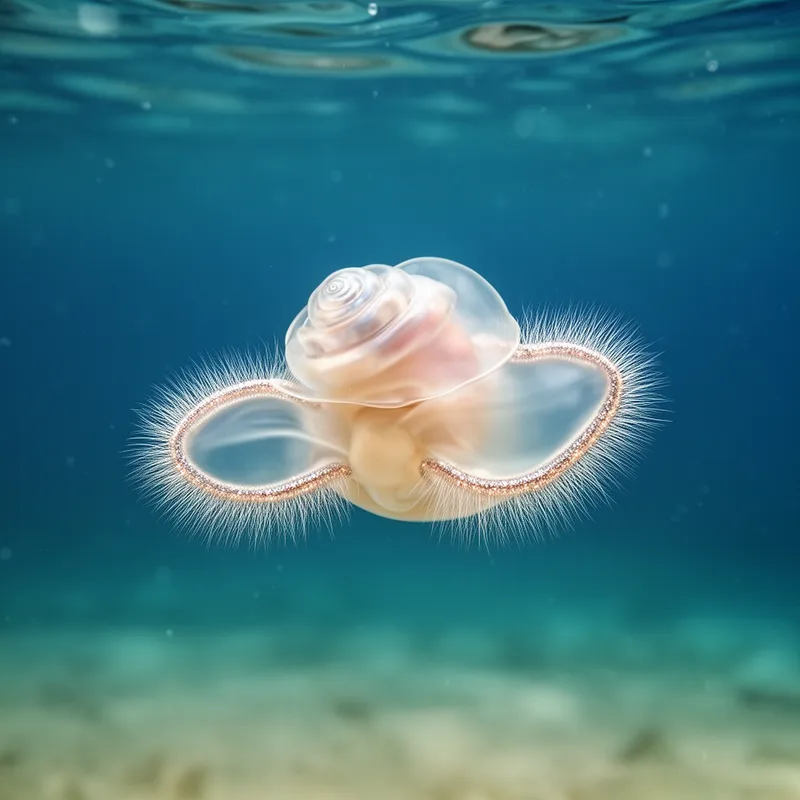
veliger


 1
9.9
- noun
- /ˈvɛlɪdʒər/
- Specialized
- After several weeks, the veliger larvae settle down and begin their transformation into adult forms.
Examples
-
The larva at the right is a veliger of the gastropod Crepidula fornicata (slipper shell snail).
Academic text (1998) -
Gastropod veligers are typically 250-750 µm in shell length.
Academic text (1998) -
In contrast, more ephemeral aggregations were characterized by low or inconsistent veliger densities (particularly late-stage larvae) and were generally outside primary tidal current pathways.
Academic text (1997) -
The veliger stage allows mollusk larvae to swim freely and disperse in their aquatic environment.
-
In the ocean, veligers use their ciliated velum to swim and feed on plankton.
Surface Forms
Morphology
veliger = velum (opaque) = velum + ger
Formed from specialized Latin combining elements ('velum' + '-ger') used in scientific nomenclature, which is not transparent to average learners.
Etymology
Veliger comes from Latin parts velum ('sail' or 'veil') and -ger ('to carry' or 'to bear'), so it means 'sail-bearer'. A veliger larva has a small velum, a fan of tiny hairs that acts like a little sail to help it swim, so the name fits its free-swimming stage.