

vegetable sponge
- noun
- /ˈvɛdʒtəbl spʌndʒ/
- After harvest, the ripe vegetable sponge is dried and used for bathing and cleaning.
Examples
-
The vegetable sponge is commonly grown in warm climates for its fibrous fruit.
-
Botanists classify the vegetable sponge as a member of the gourd family.
-
I bought a vegetable sponge for my kitchen.
-
The vegetable sponge is great for scrubbing dishes.
-
After harvest, the ripe vegetable sponge is dried and used for bathing and cleaning.
-
The vegetable sponge is commonly grown in warm climates for its fibrous fruit.
-
Botanists classify the vegetable sponge as a member of the gourd family.
Synonyms

 2
6.4
2
6.4

A tropical climbing plant that produces long, cucumber-like fruit with a stringy inside
 1
6.3
1
6.3
A natural pad of dried plant fibers from a luffa fruit used for washing skin or dishes

A climbing plant with long tube-like fruit used as food when young and as a sponge when mature

A climbing tropical plant whose fruit becomes a dry fibrous sponge and whose young fruit is eaten

A climbing plant from Pakistan with edible young fruits and fibrous mature gourds used as sponges
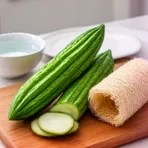
A long green vegetable with ridges that people eat when young and use as a natural sponge after it dries
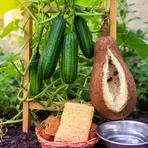
A climbing plant whose young fruits are edible and whose dried mature fruit makes a natural sponge

A tropical climbing plant with big yellow flowers, edible young fruits, and a dry inside used as a sponge

A climbing plant with large yellow flowers and edible young fruits that dry into natural sponges

A tropical climbing plant with yellow flowers, edible young fruits, and dried inner fruit used as a sponge
How Absorbent

Surface Forms
Morphology
The noun phrase is a straightforward modifier + noun composition: 'vegetable' (plant) + 'sponge' (cleaning/absorbent material) yields the idea of a sponge made from a plant. This compositional logic is common and many languages use similar terms for loofah/sponge-gourd, so a B1 learner who knows the constituents would likely infer the intended meaning.
Etymology
Vegetable sponge comes from a plant whose long, fibrous fruit is dried and used like a sponge. The name joins vegetable, meaning a plant, and sponge, so it refers to a plant used for 'cleaning'.