

vegetable ivory
- noun
- /ˈvɛdʒtəbl ˈaɪvəri/
- Collectors value antique chess pieces crafted from vegetable ivory.
Examples
-
The intricate carving was done on vegetable ivory from the tagua palm.
-
The artist carved a beautiful piece from vegetable ivory.
-
Buttons made from vegetable ivory were popular before the invention of plastic.
-
Many buttons are made from vegetable ivory instead of real ivory.
-
The artisan crafted beautiful buttons from vegetable ivory that looked like real ivory.
-
She explained that vegetable ivory is made from the seeds of the tagua palm.
-
The museum displayed intricate carvings made from vegetable ivory, showcasing its versatility.
Synonyms

A hard white seed from a South American palm used to make buttons and small objects
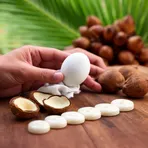
A hard white seed from a South American palm tree that people polish to make buttons

A hard brown nut from a South American palm used for carving and instead of ivory
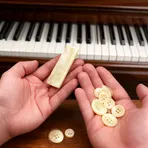
A hard pale plastic made to look like tusk for buttons or piano keys
Surface Forms
Morphology
vegetable + ivory
The sense 'a hard, ivory-like plant material used as a substitute for ivory' is directly derivable from combining 'vegetable' (plant-derived) with 'ivory' (the hard tusk material). This compound transparently names a plant-based material resembling ivory, so a B1 learner who knows both constituent words would readily infer the meaning.
Etymology
The noun vegetable ivory comes from the hard, white seed of the tagua palm in South America. The seed can be carved like animal ivory but comes from a vegetable, so people used it instead of animal 'ivory'.

