
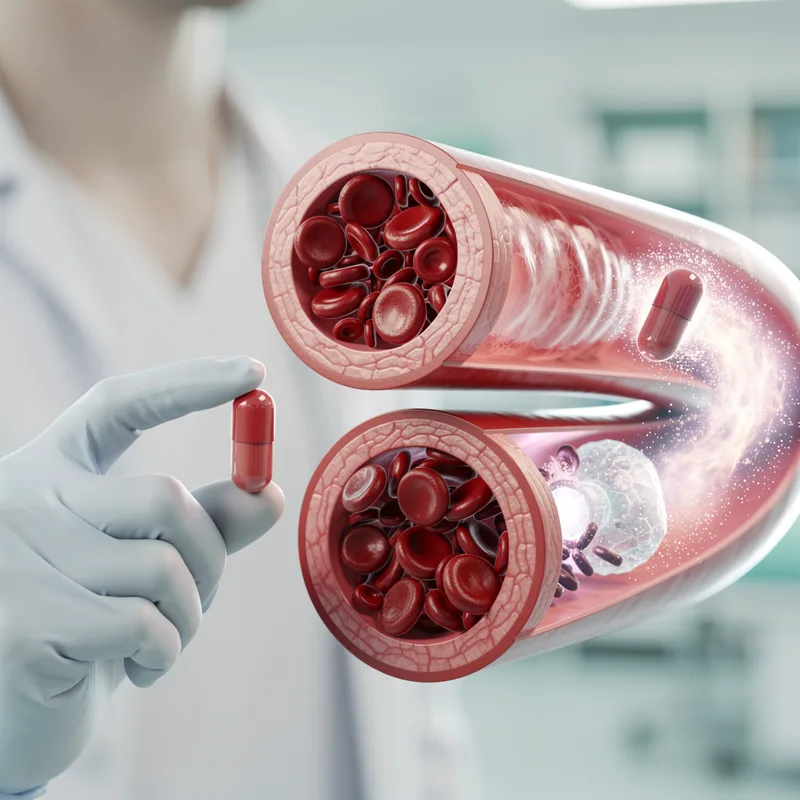
vasodilator
 1
7.2
1
7.2

- noun
- /ˌvæzoʊˈdaɪleɪtər/
- Specialized
- Doctors sometimes prescribe vasodilators to patients with hypertension to help widen their blood vessels.
- vasodilator prostaglandins
- endothelium-dependent vasodilator
- intravenous vasodilator
Loading YouTube…
Watch on YouTubeATP and ADP are dramatically potent vasodilators.
- ATP and ADP are dramatically potent vasodilators.
Examples
-
Moreover, it also has vasodilator effects, which can further compromise the horse, particularly when given with Salix.
Blog text (25) -
Because it is a vasodilator, it helps in the dilation of the veins.
Blog text (2) -
Nitric oxide is a naturally occurring vasodilator in the microcirculation.
Academic text (2002) -
Mediation of these changes by an endogenous vasodilator, nitric oxide (NO), has recently received considerable attention.
Academic text (1991) -
Finally, there was a strikingly beneficial short-term myocardial effect of vasodilators in patients with SSc.
Academic text (2007) -
Treatment with vasodilators and the 500-calorie, high-protein, low-carbohydrate diet resulted in improvement of symptoms in 83% of these patients.
Academic text (1995) -
Among the variety of drug therapies that have been used are vasodilators (e.g., carbogen, alpha blockers).
Academic text (2001) -
Lemon balm tea is popular for its effects as a vasodilator, helping to reduce blood pressure.
-
Nitric oxide is known to function as a vasodilator, increasing blood flow in the body.
Synonyms
A medicine that widens blood vessels to increase blood flow

A medicine that makes a body part wider, for example blood vessels or pupils
Antonyms

- Specialized

 1
7.3
1
7.3
Something, like a drug, that makes blood vessels narrow and raises blood pressure
How Wide
- Specialized
1
7.2

- Specialized
Surface Forms
Morphology
vasodilator = vasodilate (transparent) = vaso + dilate + or
Formed from the verb 'vasodilate' plus the agentive suffix '-or'; the meaning 'agent that widens blood vessels' follows directly from the parts.
Etymology
Vasodilator comes from the parts vaso- meaning 'vessel' (think of a vase), dilate meaning 'to widen', and -or meaning 'something that does'. So a vasodilator is 'something that widens blood vessels', which explains how it increases blood flow.