
vanitas


 1
9.9
- noun
- /ˈvænɪtəs/
- Specialized
- Here, the catalogue's literary detailing underlines Brown's effort to make floral beauty serve the iconographic tradition of Vanitas.
Examples
-
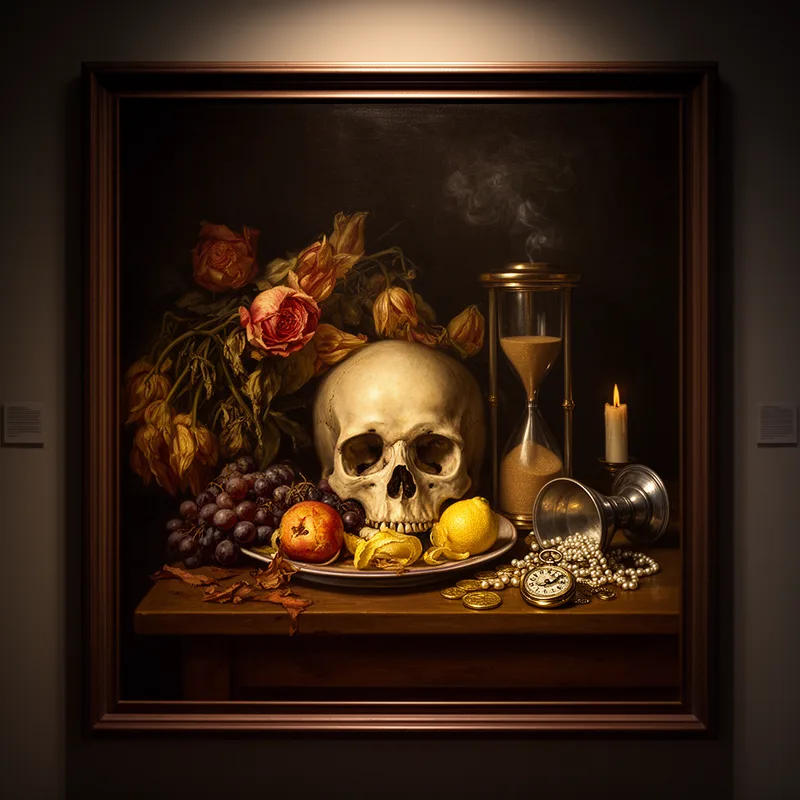
In art history, vanitas serves as a reminder that earthly possessions are temporary and should not be our primary focus.
-
It can be seen as the all seeing eye of God, but mirrors are often associated with vanitas, paintings which reflect on mortality and death.
-
Diaboli and Vanitas
Academic text (2006) -
Vanitas vanitatum!
Blog text (11) -
Her original poetry has appeared in Vanitas, the Dos Passos Review, Pressed Wafer, and Arrowsmith Press.
Blog text (9) -
Adriaen van Nieulandt, Vanitas with Skull, 1636. Haarlem, Frans Halsmuseum (photo: Stanford Visual Services)
Academic text (1996) -
The painting is an example of vanitas, illustrating the fleeting nature of life through symbols like skulls and wilting flowers.
-
Many artists create works in the style of vanitas, focusing on themes of mortality and the insignificance of material wealth.
Antonyms

Surface Forms
Etymology
Vanitas comes from the Latin word vanus, which means 'empty' or 'worthless', and is the same root as English vain and vanity. So a vanitas painting uses symbols like skulls, hourglasses, or wilting flowers to show that life is short and material things are 'empty' and do not last.