
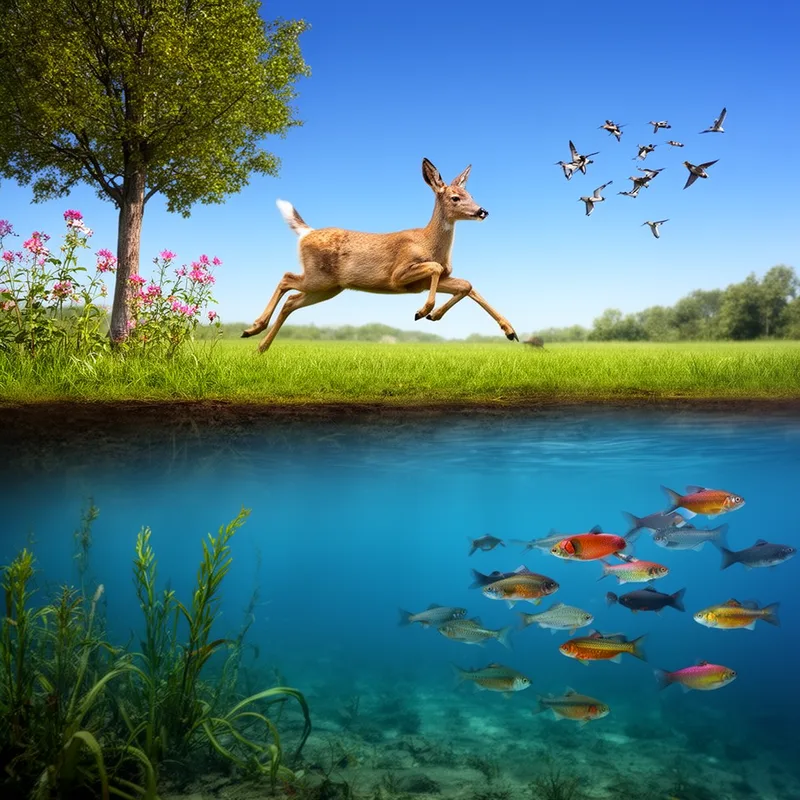
vagile
- adjective
- /ˈvædʒaɪl/
- Specialized
- Some species of birds are vagile, often traveling thousands of miles in search of food.
Examples
-
My modeling suggests that the most efficient macroscavenger adaptations increase the probability of carcass detection, which explains why highly vagile species, such as vultures, are the most obligate of vertebrate scavengers.
Academic text (2006) -
Because pteridophytes use minute, unicellular, vagile spores for dispersal, it has been assumed that ferns and related groups will be well represented in island floras.
Academic text (2002) -
The taxonomically widespread evolution of vagile vegetative propagules in aquatic plants is due to several factors.
Academic text (1996) -
However, detoxification mechanisms allow safe consumption of carrion and may have influenced the development of the complex digestive enzymes and delivery systems now seen in minimally vagile scavenging snakes.
Academic text (2006) -
The jellyfish is considered vagile because it can drift freely with the ocean currents.
-
Due to their vagile nature, some fish migrate between freshwater and saltwater habitats.
Synonyms

 1
8.6
1
8.6

Able to move by itself, like bacteria or sperm cells
Antonyms



How Mobile

Surface Forms
Morphology
vagile = vag + ile
The root 'vag' is a Latin combining form (not a standalone English word) so an average learner cannot derive the meaning from visible English base words, even though the formation follows Latin morphology.
Etymology
Vagile comes from the Latin root vagus meaning 'wandering', and you can see the same root in familiar words like vagrant and vagabond. So a vagile living thing is one that can move or wander from place to place instead of staying fixed.