

vacuolation
- noun
- /ˌvæk.ju.oʊˈleɪ.ʃən/
- Specialized
- The scientist observed vacuolation in the plant cells under the microscope.
Examples
-
We next examined vacuolation and PrPSc distribution in the brain, which are known to vary by strains/TSE prions (28, 33).
Academic text (2013) -
Brown-Brenn staining showed intense gram-positive staining of the spores, many of which demonstrated a characteristic central band and bipolar vacuolation (Figure 4).
Academic text (1998) -
Vacuolation occurs in the damaged tissue, indicating cell stress or response to injury.
-
Researchers found that the vacuolation of the embryo cells affected their development.
Synonyms


 1
9.9
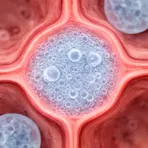
Small spaces that form inside cells and often hold liquid after cell damage
Surface Forms
Morphology
vacuolation = vacuolate (transparent) = vacuole + ation
The noun is formed by nominalizing the verb 'vacuolate' (itself derived from 'vacuole') with the productive suffix '-ation', so the meaning 'formation/presence of vacuoles' is directly recoverable.
Etymology
The word vacuolation comes from the root vacu-, which means 'empty' and is the same root in vacuum and vacant. It describes the forming of small empty pockets called vacuoles inside a cell or tissue, so vacuolation is simply the appearance of 'empty' spaces in cells.