
urushiol


 1
9.9
- noun
- /ˈuːrəˌʃiːɒl/
- Specialized
- Additionally, if you put them on soon after exposure, they can break down the urushiol that hasn't been absorbed by your skin, and you will lessen the severity and the length of your rash.
Examples
-
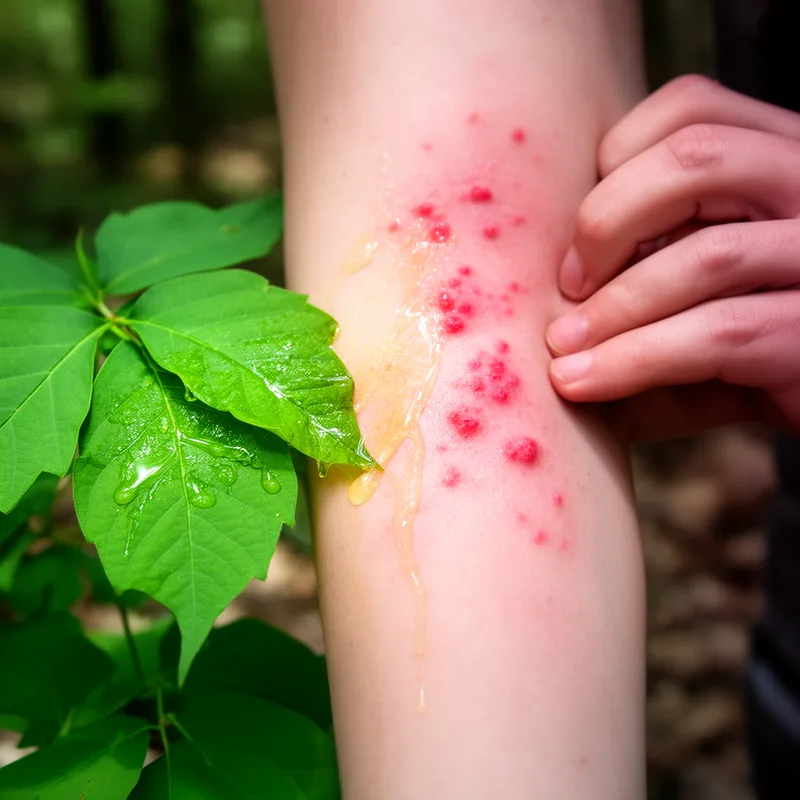
When urushiol comes into contact with your skin, it can cause a painful rash.
-
Urushiol oil lasts forever when not broken down by alcohol, menthol, etc.
Blog text (21) -
If you eat a cashew raw, or even touch the cashew tree, you can die from an allergic reaction due to the urushiol.
Blog text (30) -
Urushiol is the same chemical found in poison ivy, and it is present on the leaves of the cashew tree as well as in the raw cashew shell.
Blog text (30) -
Greater sensitivity to urushiol can lead to an extreme allergic reaction when raw cashews are ingested, and anyone allergic to poison ivy could potentially have a fatal reaction to eating true raw cashews.
Blog text (30) -
The oil known as urushiol is responsible for the skin irritation after touching poison ivy.
-
Avoid touching poison ivy, as urushiol can trigger severe allergic reactions.
Surface Forms
Etymology
Urushiol comes from the Japanese word urushi meaning 'lacquer' and the chemical ending -ol, as in alcohol. Because lacquer tree sap can cause a skin reaction, the name urushiol was given to the oily plant chemical (found in poison ivy and similar plants) that causes an itchy rash.