
uropygium
- noun
- /ˌjʊrəˈpɪdʒiəm/
- Specialized
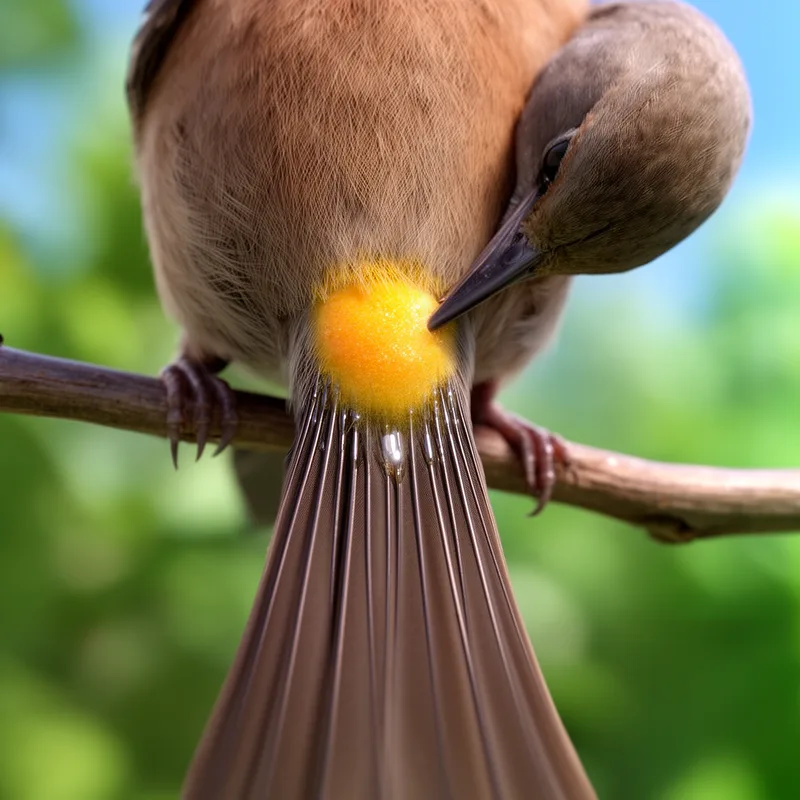
- During preening, birds rub their beaks against the uropygium to collect oil for feather maintenance.
Examples
-
The wax produced by the uropygium helps birds keep their feathers waterproof and flexible.
-
The bird's uropygium is covered in beautiful feathers.
-
A bright patch of color can sometimes be seen on the uropygium of certain bird species.
-
A peacock's uropygium is especially vibrant.
-
During preening, birds rub their beaks against the uropygium to collect oil for feather maintenance.
-
A bright patch of color can sometimes be seen on the uropygium of certain bird species.
-
The wax produced by the uropygium helps birds keep their feathers waterproof and flexible.
Surface Forms
Morphology
uropygium = uro + pygium
The elements are Greek combining forms (e.g., 'uro-' 'pygium') that are not standalone, productive English morphemes, so an average learner cannot derive the meaning from familiar English vocabulary.
Etymology
Uropygium comes from the Greek parts oura 'tail' and pugē 'rump', so it is a name for the tail area. That's why uropygium means the back part of a bird where the tail feathers grow and where birds make a wax patch to care for their feathers.

