
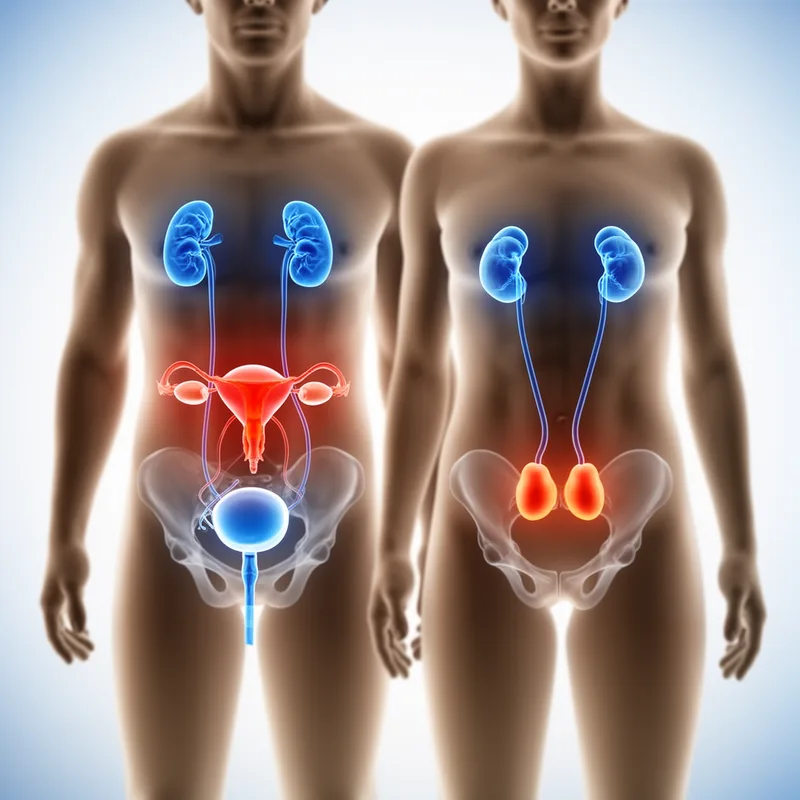
urogenital
- adjective
- /ˌjʊərəˈdʒɛnɪtəl/
- Specialized
 :
urogenital
:
urogenital
- We have documented urogenital infections in trachoma patients in Nepal but not with L2 (6), perhaps because of the small sample size.
- urogenital tract
Obviously the GI tract, obviously the lungs, but the urogenital tract was, was another place very concerningly as well.
- Obviously the GI tract, obviously the lungs, but the urogenital tract was, was another place very concerningly as well.
Examples
-
Epidemiologic studies suggest that there is an increase in urogenital chlamydial infection, especially among adolescents and young adults.
Academic text (2008) -
Common symptoms associated with the menopause include vasomotor symptoms (VMS) such as hot flushes and night sweats, sleep disturbance, mood swings, and urogenital symptoms.
Academic text (2015) -
They cause disease in animals and plants and are associated with respiratory and urogenital illness in human beings.
Academic text (1991) -
Obviously the GI tract, obviously the lungs, but the urogenital tract was, was another place very concerningly as well.
-
Sperm is produced in two long testes and released from the urogenital pore into a groove leading down to the pouch opening.
Academic text (1990) -
Most infections were with trachoma C strains, although urogenital strains B, D, E, F, and L2 were also detected.
Academic text (2013) -
Among the general population, it occurs primarily in the urogenital tract; it has also been reported in the orbit, nasopharynx, palate, temporal bone, tonsil, and neck.
Academic text (2007) -
Because most (83%) of the patients in our study had an indwelling urinary catheter, the source of fungemia could be urogenital colonization.
Academic text (2013) -
Medical conditions associated with FAS include cardiac defects, kidney and urogenital tract disorders, and liver anomalies as well as problems with sensory organs (Abel, 1987).
Academic text (1996) -
Epidemiologic studies suggest that there is an increase in urogenital chlamydial infection, especially among adolescents and young adults.
Synonyms


 1
8.2
1
8.2
Relating to the sex organs and the parts that make and pass urine
Compounds


- Specialized
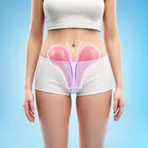
A medical field that treats problems of the bladder, kidneys, and sex organs
- Specialized
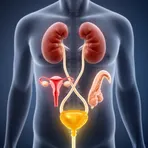
An organ system that includes the sex organs and the organs that make and pass urine
Surface Forms
Morphology
Etymology
Urogenital comes from uro- meaning 'urine' and genit- meaning 'birth' or 'to produce', the same root as generate. So, urogenital describes things that affect both the urinary and reproductive parts.