
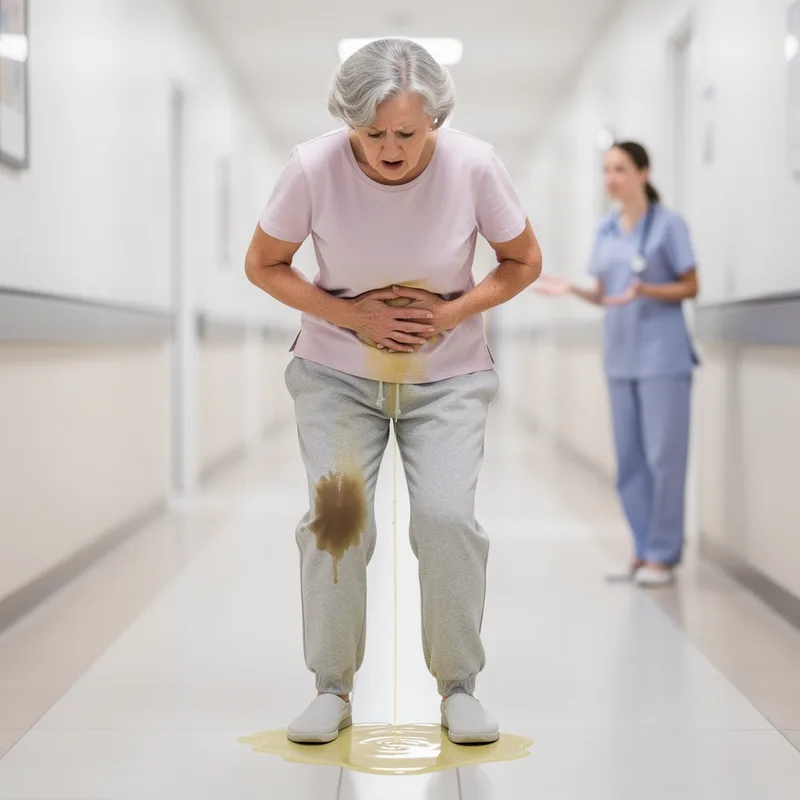
urinary incontinence
 1
4.3
1
4.3

- noun
- /ˈjʊrɪˌnɛri ˌɪnˈkɒntɪnəns/
- Specialized
- Approximately 55 percent of all nursing home residents experience chronic urinary incontinence (5).
- urinary incontinence and erectile dysfunction
- effects such as urinary incontinence
Examples
-
There were no statistically significant differences between men and women in the rates of stroke, urinary incontinence, and cardiac failure.
Academic text (2012) -
The second most prevalent health condition for both genders was urinary incontinence, followed by heart attack for men and diabetes and cancer for women.
Academic text (1995) -
The progress in the area of urinary incontinence is particularly notable.
Academic text (1995) -
Thus, through nursing home research, significant progress is being made in the diagnosis and treatment of urinary incontinence.
Academic text (1995) -
Urinary incontinence is a major problem for elderly chronic care patients.
Academic text (1990) -
However, the use of pain medication is associated with side effects of sedation, confusion, falls, and urinary incontinence in all age groups, especially in elders.
Academic text (2004) -
For men with urinary incontinence after prostatectomy, suggest, in the first instance, supervised pelvic floor muscle training.
Academic text (2012) -
Urinary incontinence severity is determined primarily by the frequency of episodes and the volume of involuntary urine loss.
Academic text (1990) -
By conducting thorough assessments in the nursing home, causes of urinary incontinence have been identified (Resnick, Yalla, Laurino, 1989).
Academic text (1995) -
Sheila's problem is known as urinary incontinence, meaning the involuntary leakage of urine.
Synonyms
 9
7.6
9
7.6
Not able to control when you pass urine or have a bowel movement


 1
9.9
1
9.9
Not being able to control peeing, often during sleep
 1
9.6
1
9.6
Not being able to control when you pee or poo
How Leaky

Surface Forms
Morphology
The meaning is directly compositional: 'urinary' specifies the domain (relating to urine) and 'incontinence' names the loss of control, so a learner who knows both constituents can infer 'inability to control urine'. This modifier+noun medical compound is common cross-linguistically and follows standard word-formation patterns, making it transparent despite being specialized vocabulary.
Etymology
Urinary incontinence names the problem very plainly: urinary is about urine and incontinence means 'not able to hold'. That clear picture of not being able to hold urine explains why the term means 'involuntary urination'.