
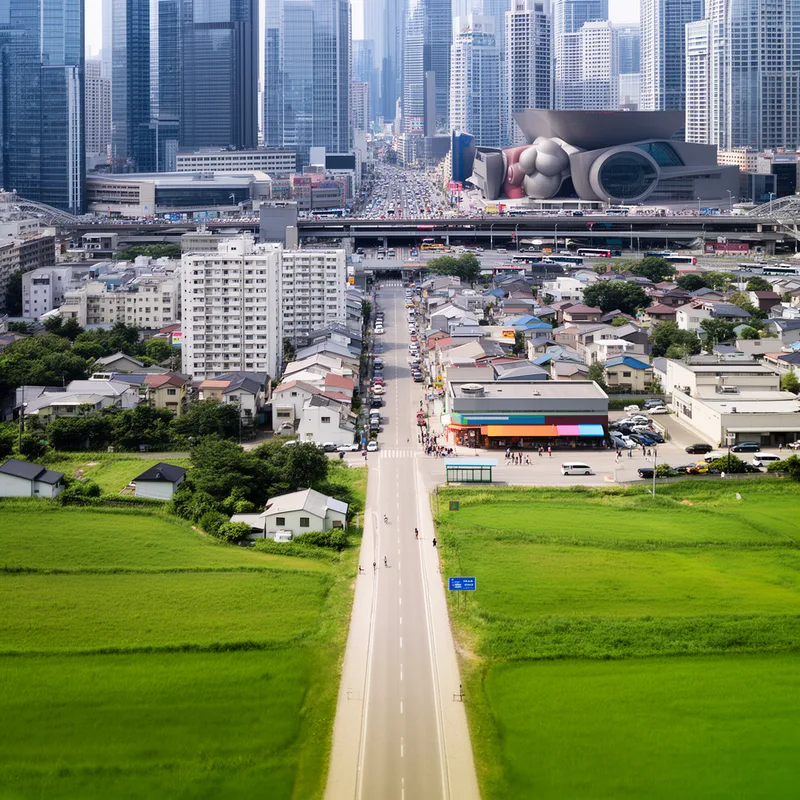
urbanicity


 1
7.5
- noun
- /ˌɜːrbəˈnɪsɪti/
- Specialized
- Among women, greater levels of urbanicity were associated with lower odds of high blood pressure.
- level of urbanicity
- greater urbanicity
- interaction between urbanicity
Examples
-
By contrast, urbanicity was clearly associated with lower physical activity among men regardless of SEP.
Academic text (2011) -
We took the provincial-level indicator of urbanicity from the 2001 census.
Academic text (2011) -
Figures 1 and 2 show predicted risk factor levels for varying levels of urbanicity and education.
Academic text (2011) -
Our results also showed that the associations of urbanicity with risk factors were not homogeneous across social groups.
Academic text (2011) -
Data are limited on the social patterning of chronic disease risk factors according to urbanicity in Latin America.
Academic text (2011) -
Our analysis shows that urbanicity explains some of these differences, although the majority of this variance is left unexplained.
Academic text (2015) -
For women, we found statistically significant interactions between urbanicity and education for BMI, diabetes, and low physical activity.
Academic text (2011) -
Heterogeneity of the social patterning of cardiovascular risk factors by urbanicity for women is shown in Figure 2.
Academic text (2011) -
Our results also showed that the effects of urbanicity on chronic disease risk varied by socioeconomic position (SEP).
Academic text (2011) -
Higher urbanicity usually leads to more access to health services in the community, improving overall well-being.
Antonyms


How Urban
102
4.8
 52
2.7
- Specialized
1
7.5
9
2.7
407
1.5
71
2.0
Surface Forms
Morphology
Etymology
Urbanicity comes from urban, which comes from the old Latin word urbs meaning 'city', plus the ending -icity meaning 'state' or 'quality'. So urbanicity simply means the 'city-ness' of a place — how city-like it is, which is why high urbanicity often means more buses, shops, and cultural events.