
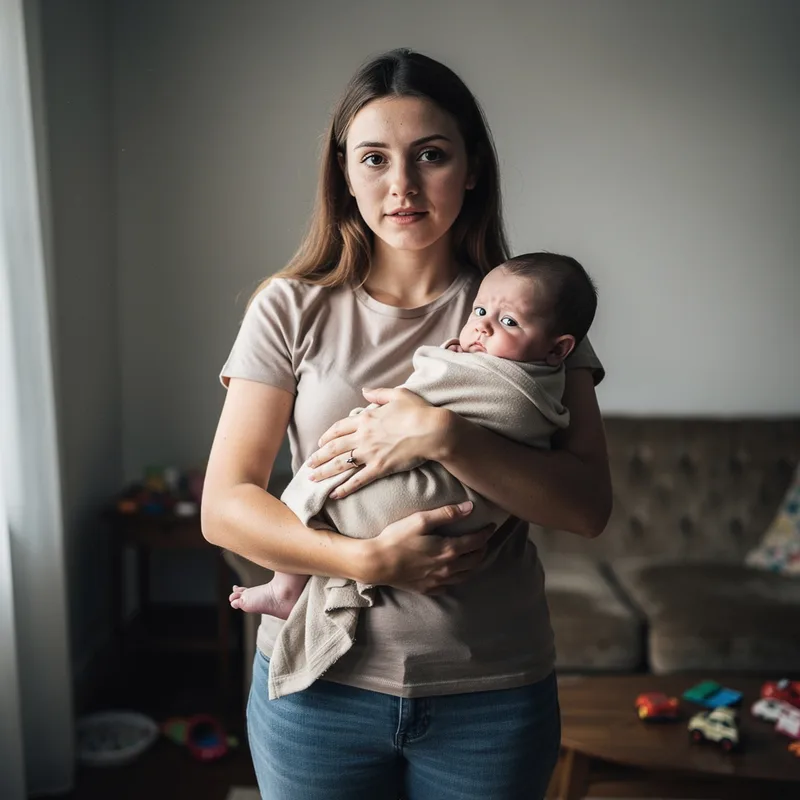
unwed mother
 11
3.4
11
3.4

- noun
- /ˈʌnˌwɛd ˈmʌðər/
- In 1998, fully 33 percent of all children were born to unwed mothers - an all-time high.
- born to an unwed mother
Examples
-
Catholic girls were taught that unwed mothers gave up their babies rather than subject them to disgrace.
Fiction book (2002) -
My girlfriend became pregnant and was sent off to a home for unwed mothers in the Midwest.
Fiction book (2000) -
In the United States, every third child is born to an unwed mother.
Academic text (2002) -
She'd known when she took the job that they would be helping the unwed mothers from the last war.
Fiction book (2002) -
Unwed mothers go to have their babies.
-
In 1965, besides, it was socially grim to be an unwed mother.
Fiction book (1992) -
A 17-year-old unwed mother was reported to Child Welfare because her 3-month-old wasn't gaining weight.
Blog text (13) -
The incidence of unwed motherhood is actually rising faster for whites than blacks; unwed mothers now account for 23 percent of all white births.
Academic text (1993) -
She decided to create a support group for unwed mothers in her community.
-
The documentary focused on the challenges faced by unwed mothers raising their children alone.
Synonyms
 57
2.7
57
2.7
A mother who raises her children without a partner
 12
8.2
12
8.2
A mother of a man's child who is often not married or living with him
Surface Forms
Morphology
The phrase 'unwed mother' is fully compositional: 'unwed' means not married and 'mother' means a female parent, so a learner who knows both words can infer 'a woman who has a child and is not married.' This adjective+noun pattern is a common, cross-linguistic construction, making the meaning immediately transparent to B1 learners.
Etymology
Unwed mother is a simple, literal phrase: un- means 'not' and wed means 'married'. So unwed mother means a woman who has a child but is not married.