
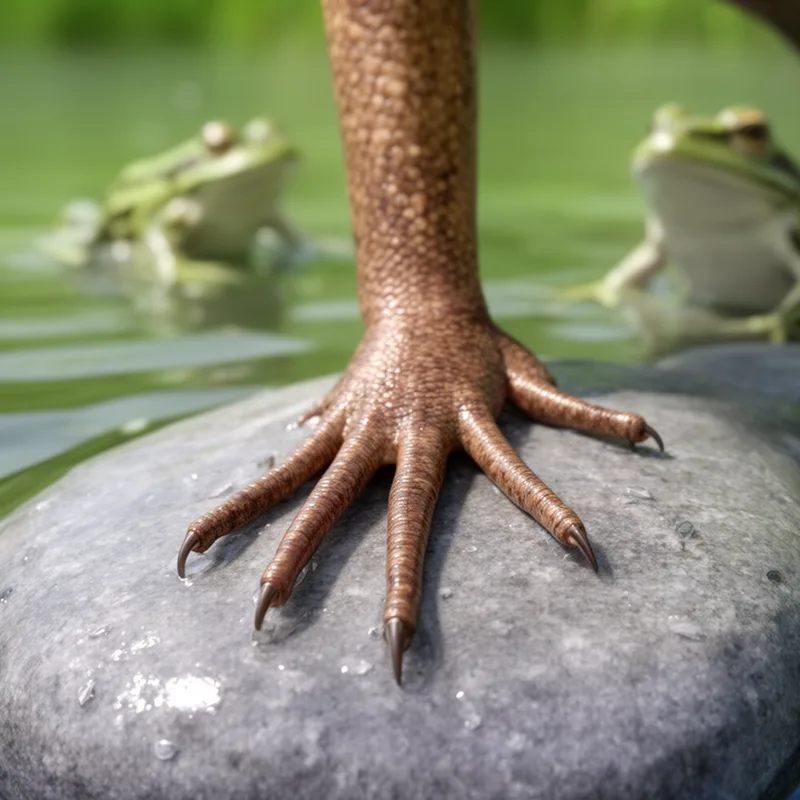
unwebbed
- adjective
- /ʌnˈwɛbd/
- Specialized
- The lizard had unwebbed feet, unlike the frogs in the same pond.
Examples
-
Some duck species have unwebbed toes, which affects their swimming ability.
-
The unwebbed feet of the cat allow for better climbing.
-
Scientists observed that the primitive frog’s unwebbed toes limited its movement in water.
-
Birds like ostriches have unwebbed toes.
-
The dog has unwebbed toes, making it better suited for running on land.
-
Many birds, like sparrows, have unwebbed feet to help them perch on branches.
-
Unlike ducks, which have webbed feet, chickens are known for their unwebbed toes that allow them to scratch the ground.
Antonyms


How Webbed

Surface Forms
Morphology
Etymology
Unwebbed starts with un- meaning 'not' and uses web like a spider's web or the thin skin that joins toes. So unwebbed means the toes are 'not' joined by that skin, which explains why unwebbed feet do not help much for swimming.