

unshoed
- adjective
- /ʌnˈʃud/
- Many wild ponies remain unshoed throughout their lives, unlike domesticated ones.
Examples
-
The unshoed horse trotted through the field.
-
The horse ran swiftly across the field, completely unshoed.
-
He walked barefoot, his feet unshoed and dusty from the road.
-
Why is the animal unshoed?
-
Many wild ponies remain unshoed throughout their lives, relying on their natural hooves.
-
The horse ran swiftly across the field, its hooves unshoed and free to touch the grass.
-
He walked barefoot, his feet unshoed and dusty from the road, enjoying the feel of the ground.
Synonyms

 72
1.1
72
1.1

Not wearing shoes or socks
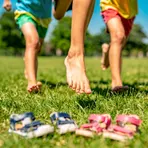 4
1.7
4
1.7
Having nothing on the feet
 1
8.6
1
8.6
A person or animal that is not wearing shoes, like a horse without horseshoes
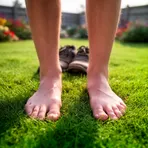

 1
1.5
1
1.5
With no shoes on your feet
Antonyms
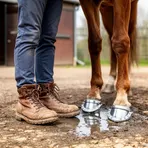 1
5.6
1
5.6
A person, animal, or thing that wears coverings on the feet, for example horses with metal pieces on their hooves
How Shod
1
7.2

Surface Forms
Morphology
Etymology
Unshoed is made from the prefix un- meaning 'not' and the word shoe, so it simply means 'not wearing shoes' or 'barefoot'. That's why unshoed is used for people or animals, especially horses, that do not have shoes.