

unmusicality
- noun
- /ˌʌnˌmjuːzɪˈkælɪti/
- She worried that her unmusicality would hold her back in the choir auditions.
Examples
-
His total unmusicality was evident whenever he tried to sing along at parties.
-
Despite his unmusicality, he enjoyed listening to classical concerts.
-
Her unmusicality is quite evident.
-
Don't let your unmusicality stop you!
-
His total unmusicality was evident whenever he tried to sing along at parties.
-
She worried that her unmusicality would hold her back in the choir auditions.
-
Despite his unmusicality, he enjoyed listening to classical concerts.
Synonyms

 2
9.4
2
9.4

Cannot hear small differences in music or people's speech
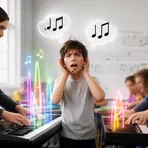
Unable to hear differences between musical notes

A condition that makes a person unable to recognize or make music
Antonyms

How Musical

Surface Forms
Morphology
Etymology
Unmusicality is made from un- ('not') and musical, which comes from music. So it means the quality of being 'not musical', for example not having a good sense of tune or rhythm.