
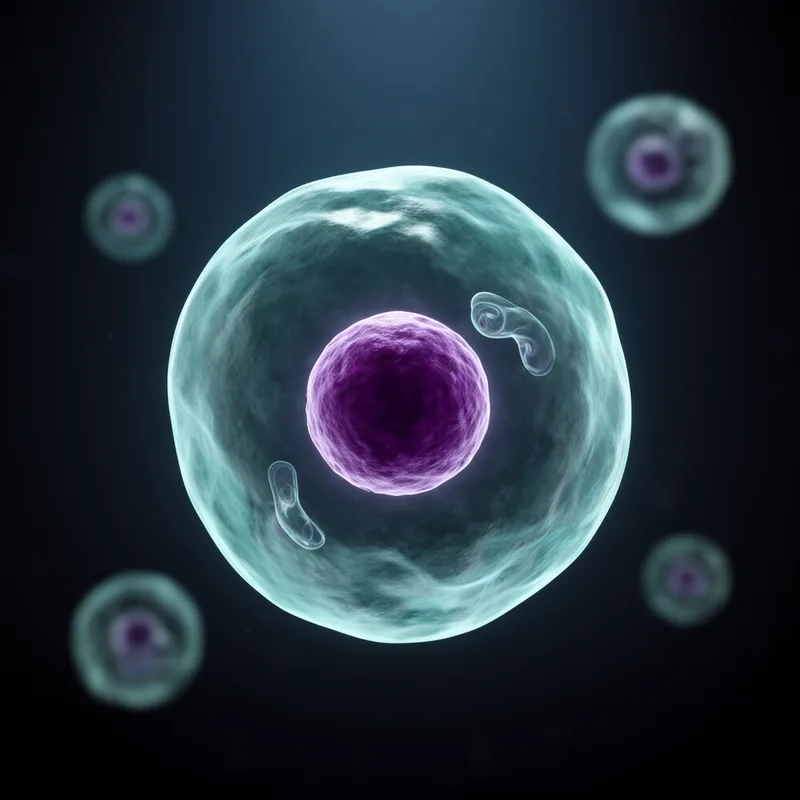
uninucleate
- adjective
- /ˌjuːnɪˈnjuːkliːət/
- Specialized
- The plant species produces uninucleate cells that are essential for its growth.
Examples
-
Researchers focused on uninucleate cells during their studies of cellular development.
-
Under the microscope, the uninucleate organism showed distinct features that were easy to identify.
-
The floral buds ranging from 13-15 mm in size have a higher percentage of uninucleate microspores compared with other sizes.
Academic text (2015) -
Slides were observed under the Nikon Optiphot Fluorescence Microscope at 40x for the uninucleate stage of the microspores (Summers et al., 1992).
Academic text (2015)
Synonyms
Having only one nucleus in each cell
A cell that has only one nucleus
Having only one central part inside a cell that holds DNA
Antonyms
How Nucleated

Surface Forms
Morphology
uninucleate = nucleate (transparent) = uni + nucle + ate
The word is formed by the numeric prefix 'uni-' ('one') attached to 'nucleate' ('having a nucleus'), yielding 'having one nucleus' in an obvious way.
Etymology
The word uninucleate combines the parts uni- ('one') and nucleus ('center' or 'kernel'), so you can picture a single center inside the cell like one small 'unit'. That's why a uninucleate cell is a cell with one nucleus.

