
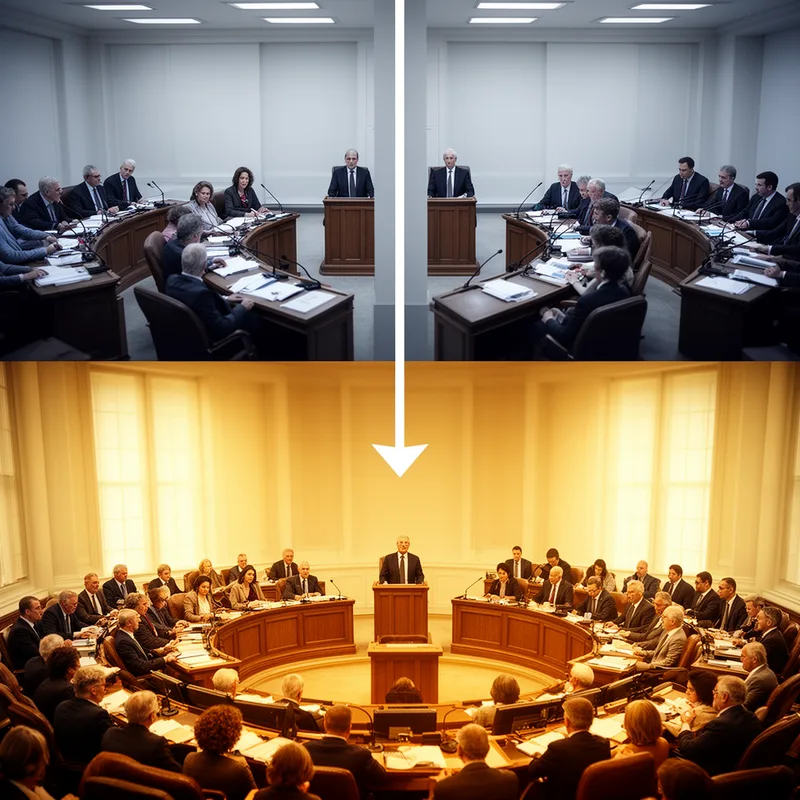
unicameralism


 1
9.1
- noun
- /ˌjuːnɪˈkæmərəlɪzəm/
- The state of Nebraska is known for its unicameralism, having a single legislative chamber that simplifies lawmaking.
Examples
-
The country adopted unicameralism to streamline its legislative process.
-
Debates about unicameralism often focus on efficiency and government transparency.
-
Some countries have adopted unicameralism to simplify their legislative process.
-
The state legislature considered moving from bicameralism to unicameralism to reduce costs.
-
Many argue that unicameralism can lead to more efficient governance.
-
Many advocates believe that unicameralism leads to more efficient government by eliminating the complexities of a bicameral system.
-
Proponents of unicameralism argue that it reduces the possibility of legislative gridlock and promotes accountability.
Antonyms

Surface Forms
Morphology
unicameralism = unicameral (semi-transparent) = uni + cameral + ism
The noun is clearly formed by adding the productive suffix '-ism' to 'unicameral', but 'unicameral' itself is built from the technical element 'cameral' plus 'uni-', which may not be fully transparent to average learners.
Etymology
The word unicameralism comes from uni- meaning 'one', the same uni- you see in uniform or unicorn, and camera meaning 'chamber' or 'room'. So unicameralism is the idea of a government having only one law-making 'chamber'.