
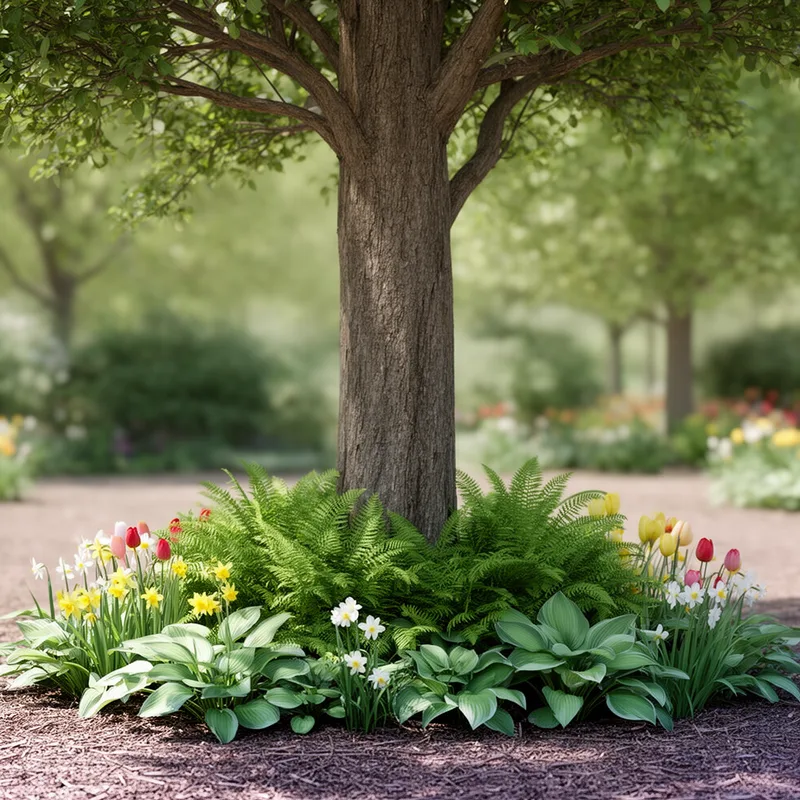
underplanting
- noun
- /ˌʌndərˈplæntɪŋ/
- Specialized
- Colorful bulbs in the underplanting bloom early in spring before the trees leaf out.
Examples
-
The gardener decided on underplanting to enhance the garden's beauty.
-
The underplanting of ferns and hostas added lush greenery beneath the tall oak trees.
-
Gardeners often use underplanting to fill empty spaces and prevent weeds from growing.
-
Many landscapers recommend underplanting with shade-tolerant plants.
-
Underplanting with shade-tolerant plants can enhance the beauty of your garden beneath the trees.
-
The gardener focused on underplanting to create a vibrant ecosystem under the existing shrubs.
-
For a lush look, consider underplanting your garden with colorful flowers that thrive in low light.
Synonyms
 11
5.6
11
5.6

Small plants, bushes, and young trees that grow under tall trees in a forest
 7
3.9
7
3.9
Low plants and bushes that grow under tall trees in a forest
 1
5.1
1
5.1
A layer of small trees and plants under taller trees
How Dense
- Specialized
1
4.7

- Specialized
Surface Forms
Morphology
underplanting = underplant (transparent) = under + plant + ing
The structure is clearly under + plant, with -ing forming the noun/gerund referring to the activity or result.
Etymology
Underplanting comes from under- meaning 'below' and planting, from plant, meaning 'to put a plant in the ground'. So underplanting is easy to remember: it means planting small plants 'below' taller trees or bushes to make a lower layer of green and to fill empty spaces.