

unchildlike


 1
7.9
- adjective
- /ʌnˈtʃaɪldlaɪk/
- Her unchildlike attitude toward sharing toys set her apart from the other children in the playground.
Examples
-
The little child in the Neuro unit, with the p59 unchildlike taste in holos.
Fiction book (1992) -
The boy's behavior was oddly unchildlike, as he discussed complex issues that most children would not understand.
-
Behind it, she began to sob, a dry, hopeless, unchildlike sound.
Fiction book (1997) -
"I told Moira that I wanted to be just like her when I grew up; and she laughed at me and told me all about what the schools were like and everything?" And then, before he could say anything, the p69 unchildlike child proceeded to tell him about his own program.
Fiction book (1992) -
"We appreciate Grace as a person, and not just because she's our daughter," Hortense, the mother, was fairly often heard to say, which may have accounted for the fact that Grace was a rather unchildlike child: precocious, impertinent, too smart for her own good.
Fiction book (1997) -
Her stern and already stiff profile also seemed carved out of marble, but the smile on her sickly lips expressed unchildlike and boundless anguish, some great grievance.
Fiction book (1991) -
He spoke with an unchildlike seriousness, as if he understood the weight of the conversation better than the adults.
Synonyms
 1
7.9
Acts in a grown-up, serious way
Antonyms
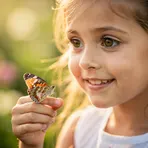
How Childlike

Surface Forms
Morphology
Etymology
Unchildlike comes from un- meaning 'not', plus child and -like meaning 'similar to', so it is the opposite of childlike. That's why unchildlike describes behavior, feelings, or words that do not have the innocence or simple ways of a child.