
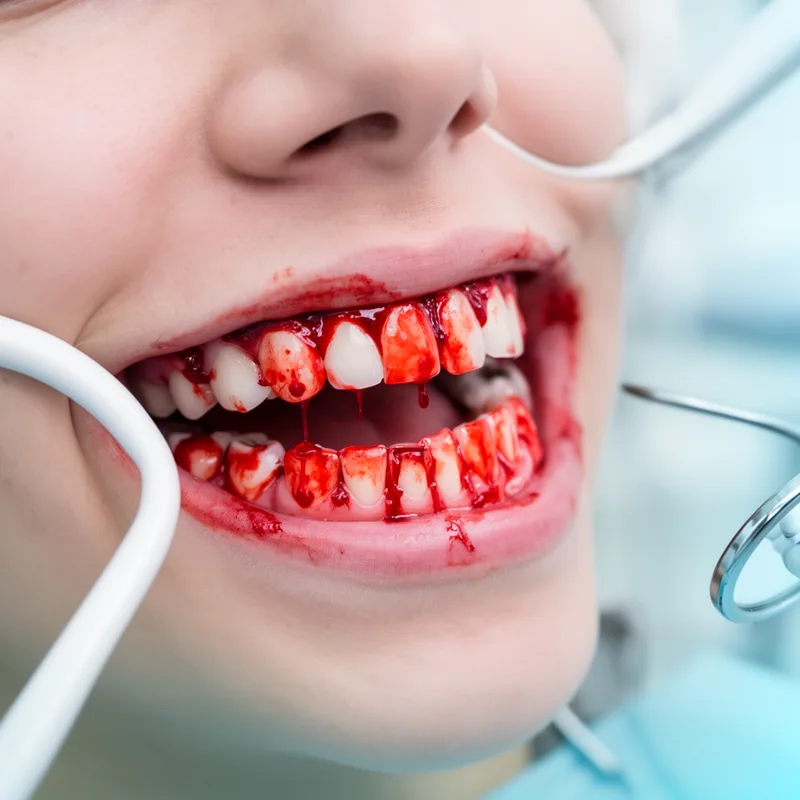
ulemorrhagia
- noun
- Specialized
- Improper oral hygiene can lead to ulemorrhagia, which causes swollen gums and bleeding.
Examples
-
Persistent ulemorrhagia may indicate underlying gum disease or vitamin deficiency.
-
The dentist noted signs of ulemorrhagia during the patient's routine checkup.
-
Improper oral hygiene is a common cause of ulemorrhagia among adults.
-
She was diagnosed with ulemorrhagia last week.
-
The dentist explained that ulemorrhagia can be caused by gum disease.
-
Frequent episodes of ulemorrhagia might signal a need for dental treatment or lifestyle changes.
-
During her examination, the dentist discovered ulemorrhagia that required further investigation.
Antonyms



How Severe

Surface Forms
Morphology
ulemorrhagia = ule + morrhagia
This is a learned medical formation from classical elements meaning roughly 'gum' and 'bleeding', but the parts are not transparent to an average B1 learner.
Etymology
Ulemorrhagia comes from medical word parts: the start ule- refers to the 'gums' and the ending -rrhagia means 'excessive bleeding', as in hemorrhage. So ulemorrhagia is simply heavy or abnormal bleeding of the gums.