
tyrosinemia
9.9
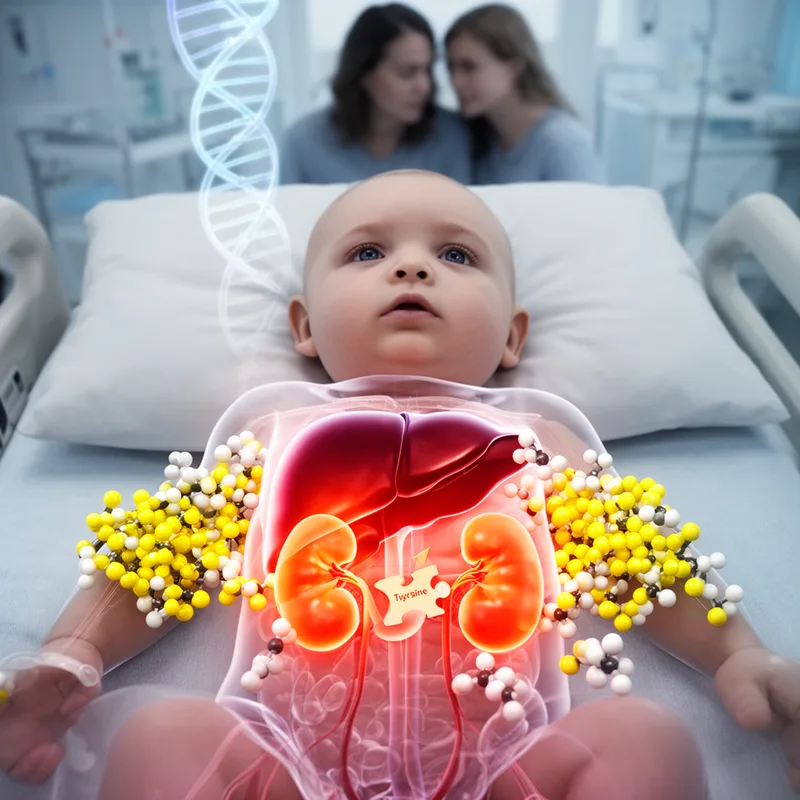
A rare inherited disease where the body cannot break down the amino acid tyrosine, harming liver and kidneys
- noun
- /ˌtaɪrəˈsɪniːmiə/
- Specialized
:
tirosinemia
- Early diagnosis of tyrosinemia can significantly improve health outcomes for children.
Examples
-
Children with tyrosinemia may experience developmental delays if not treated promptly.
-
Families affected by tyrosinemia often seek specialized treatment to manage liver issues.
-
In several of my columns, I've discussed this evolutionary problem in connection with smallpox and hereditary tyrosinemia, as well as malaria (June 1988, February 1989, February 1990).
Academic text (1991)
Surface Forms
tyrosinemia singular
tyrosinemias plural
Morphology
Etymology
Tyrosinemia comes from tyrosine, the amino acid named from Greek tyros meaning 'cheese' because it was first found in cheese, and the ending -emia meaning 'blood', the same ending in anemia. So tyrosinemia literally means 'tyrosine in the blood', which explains the illness where tyrosine builds up in the blood and causes liver and kidney problems.

