

tyrannosaurus
- noun
- /təˌrænəˈsɔrəs/
- Specialized
- With carefully timed page turns, the music climax will coincide with the story's conflict element—the tyrannosaurus snapping up the bird in mid-flight.
- tyrannosaurus snaps
Examples
-
Two features of the music we experienced as "synced" were (a) the "living" tyrannosaurus snapping the bird from the air and (b) the bird flying safely through the fossilized and reconstructed bones of the dinosaur.
Academic text (2015) -
I have an iguanodon and a tyrannosaurus.
-
Imagine a little tyrannosaurus Rex comes out, you know--
-
This used to be the most pristine tyrannosaurus skeleton on Earth, formerly valued at $100 million.
-
Close-up of a bird eye-to-eye with a tyrannosaurus: 2:52 Tyrannosaurus snaps up bird.
Academic text (2015) -
Continued flight with three dinosaurs in view: 2:31 Bird at nose of brachiosaurus with tyrannosaurus's jaw just in view: 2:41
Academic text (2015) -
Although many types of dinosaurs are depicted, three types are featured: (a) the plant-eating brachiosaurus, (b) the flying pteranodon who joins the bird in flight, and (c) the menacing, meat-eating tyrannosaurus.
Academic text (2015) -
The quiet that follows in the music seems to suggest a solemn mood for the reader until the trumpet heralds faintly with the theme's triplet motif, announcing the bird's successful flight through the bones of the tyrannosaurus.
Academic text (2015) -
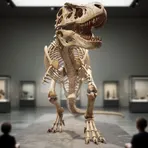
The tyrannosaurus was one of the largest carnivorous dinosaurs, known for its massive teeth and powerful jaws.
-
Paleontologists discovered fossils of a tyrannosaurus that had lived over 65 million years ago.
Synonyms
 3
8.6
3
8.6

A large two-legged meat-eating dinosaur with big sharp teeth
 1
4.6
1
4.6
A very large meat-eating dinosaur from North America that stood on two legs with a big head and sharp teeth
Compounds
- Specialized
1
4.6
A very large meat-eating dinosaur from North America that stood on two legs with a big head and sharp teeth
Surface Forms
Morphology
tyrannosaurus = tyranno + saurus
The word is composed of Greek combining forms 'tyranno-' (tyrant) + '-saurus' (lizard); speakers who recognise these combining forms can infer 'tyrant lizard', but the components are not standalone common English words for many learners.
Etymology
Tyrannosaurus comes from Greek parts tyrannos meaning 'tyrant' and sauros meaning 'lizard'. So, 'tyrant lizard' gives a clear image of a very large, fearsome meat-eating dinosaur.