

tympanic membrane
 1
5.9
1
5.9

- noun
- /tɪmˈpænɪk ˈmɛmˌbreɪn/
- Specialized
- Sound waves cause the tympanic membrane to vibrate, allowing us to hear.
- tympanic membrane perforations
- tympanic membrane and ossicles
- intact tympanic membrane
Loading YouTube…
Watch on YouTubeYou can have a perforated tympanic membrane or eardrum correcting that can make the tendencies go away.
- You can have a perforated tympanic membrane or eardrum correcting that can make the tendencies go away.
Examples
-
For example, occasionally the opening in the tympanic membrane will not be directly over the round window niche.
Academic text (1999) -
The ideal approach for closure of tympanic membrane perforations in children remains controversial.
Academic text (1996) -
One route is through the tympanic membrane into the middle ear.
Academic text (1999) -
The round window niche can often be seen through a normal tympanic membrane.
Academic text (2001) -
The laser is also useful for work on the tympanic membrane.
Academic text (1995) -
I think my tympanic membrane is ruptured.
-
Finally, a third method is to apply phenol directly to the tympanic membrane.
Academic text (1999) -
In this photograph of a right tympanic membrane, the round window niche appears as a shadow behind the drum.
Academic text (2001) -
The patient's auricle, external canal, and tympanic membrane appeared normal.
Academic text (1996) -
A probe microphone was used for monitoring the acoustic input level to the tympanic membrane.
Academic text (1998)
Synonyms
 26
1.5
26
1.5
A thin skin inside the ear that vibrates when sound reaches it
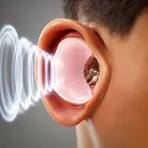
A thin skin inside the ear that vibrates when sound reaches it
Surface Forms
Morphology
The phrase is a literal, technical compound: 'tympanic' = relating to the eardrum and 'membrane' = a thin layer, so the meaning 'the membrane of the eardrum' is directly derivable from the parts. Although medical, this compositional pattern is transparent and is mirrored cross-linguistically (e.g. membrana timpánica), so a learner who knows both constituents will understand the MWE.
Etymology
Tympanic membrane comes from an old Greek word: tympanic comes from a word for 'drum' and membrane means 'thin skin'. This thin, drum-like skin in the ear vibrates when sound hits it, so the phrase means 'the thin layer in the ear that vibrates'.