

twist bit
- noun
- Specialized
- The carpenter selected a twist bit to drill holes for the door hinges.
Examples
-
Make sure to use a sharp twist bit when working with metal for a clean cut.
-
I damaged the twist bit trying to drill through concrete.
-
I need a new twist bit for my drill.
-
The carpenter used a twist bit to create holes in the wood.
-
To create the shelf, I used a twist bit to drill precise holes in the wood.
-
The plumber chose a long twist bit for drilling through the thick metal pipes.
-
When assembling the new furniture, she found that a twist bit made the process much easier.
Synonyms
 40
6.5
40
6.5

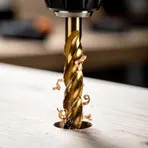
The cutting part of a drill that makes holes
 11
3.7
11
3.7
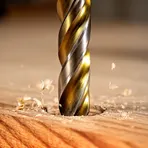
A metal tool that makes holes in hard materials like rock or wood when attached to a drill


 1
4.9
1
4.9
A small cutting tool with spiral grooves that makes holes in wood or metal
How Wide

Surface Forms
Morphology
The compound is directly compositional: 'twist' (a helical or winding shape) modifies 'bit' (the cutting part of a drill), so the phrase denotes a drill bit with a helical twist. This follows a common English noun-noun construction, so a B1 learner who knows both constituents can readily infer the meaning.
Etymology
Twist bit comes from the tool's shape: a bit that twists into wood or metal in a spiral. The spiral grooves pull out the chips as it turns, so twist bit now means a drill bit with spiral grooves used to make holes.