
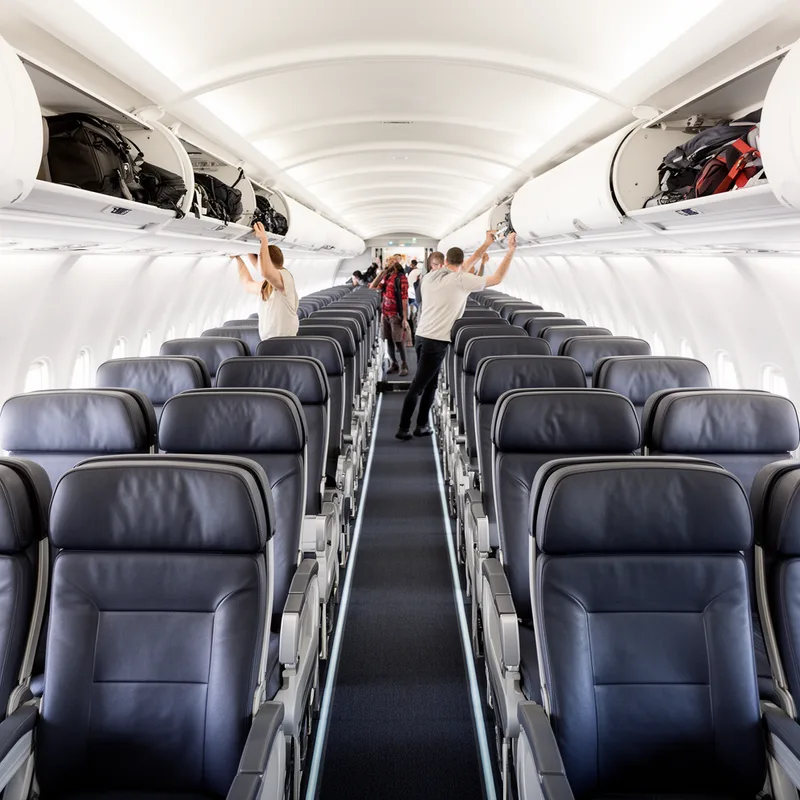
twin-aisle airplane
- noun
- /twɪnˈaɪl ˈɛrpleɪn/
- Specialized
- Most international flights use twin-aisle airplanes to accommodate more passengers on long journeys.
Examples
-
Passengers find it easier to move around on a twin-aisle airplane compared to a single-aisle design.
-
Boeing and Airbus both manufacture popular twin-aisle airplanes for the global market.
-
The new twin-aisle airplane can accommodate more passengers.
-
Many airlines are investing in twin-aisle airplanes for long-haul flights.
-
Most international flights use twin-aisle airplanes to accommodate more passengers on long journeys.
-
Boeing and Airbus both manufacture popular twin-aisle airplanes for the global market.
-
Passengers find it easier to move around on a twin-aisle airplane compared to a single-aisle design.
Synonyms

 2
3.9
2
3.9

A large passenger plane with two aisles and a wide cabin

A large passenger plane with two aisles that carries many people

A large passenger plane with two aisles that carries many people
Surface Forms
Morphology
twin-aisle + airplane
The meaning is directly derivable from the constituents: a B1 learner who knows 'twin' (two) and 'aisle' (passage between seats) will understand 'twin-aisle airplane' as an airplane with two aisles. This is a regular adjective-noun compound following standard English composition patterns and is cross-linguistically transparent, so prior exposure is not necessary for comprehension.
Etymology
Twin-aisle airplane comes from how the plane looks inside: it has two long walkways called aisles, so twin means 'two' here. That picture of two aisles between groups of seats explains why the term means a large passenger plane with more seats and easier movement.