
tundra
 23
6.6
23
6.6

- noun
- /ˈtʌndrə/
- UK
- Heart-stopping vistas of rolling tundra pay homage to the rugged chain of visual pearls that comprise the Alaska Range.
- Arctic tundra
- alpine tundra
- frozen tundra
Loading YouTube…
Watch on YouTubeIt was the largest building under one roof in the world, and it was high in the Russian tundra near this large body of water.
- It was the largest building under one roof in the world, and it was high in the Russian tundra near this large body of water.
- And to be without a story is to be lost, lost in the vastness of a world that spreads in all directions, like Arctic tundra or sea ice.
- They're seeking to restore lost ecosystems and use gene editing to restore the woolly mammoth to the Arctic tundra.
- But I'm especially happy that these people could join us in here after mushing their sled dogs through the Midtown tundra to join us here at the end of the Eagle.
Examples
-
Hiking through the tundra, we get bitten by flies and mosquitoes.
Academic text (1998) -
It breeds in the Arctic tundra, then flies all the way down to Argentina and back, all in one year.
-
Areas that are now tundra had forests very much like the ones we have here in Connecticut.
-
Ethnographers report that a few families still move between the tundra and the villages, depending on the season.
Academic text (1993) -
I want to go to Alaska and roam around the tundra someday.
Fiction book (1991) -
To traverse the tundra regularly all summer, though, they first had to build a system of boardwalks.
Academic text (2008) -
Consequently, ice age fauna still roamed the Siberian tundra after those species had died out in Europe.
Academic text (2000) -
The Endicott range is full of jagged peaks, icy streams, and gnarled tundra valleys.
Fiction book (1993) -
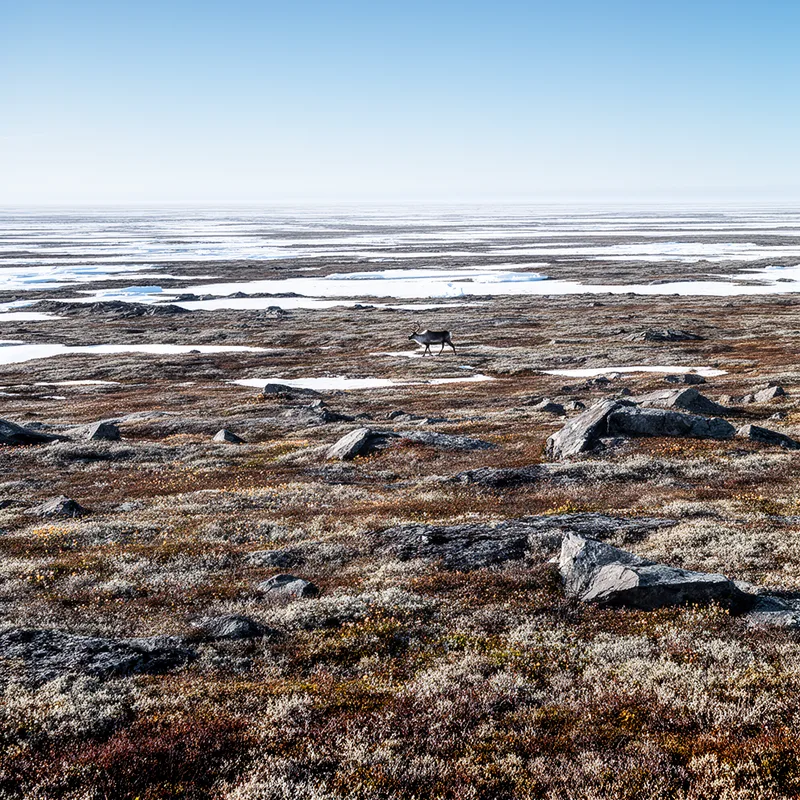
The vast expanse of the Arctic tundra is home to unique wildlife and low-growing vegetation.
-
During the summer, the tundra blooms with colorful flowers despite its harsh climate.
Compounds


Surface Forms
Etymology
Tundra comes from the Russian word tundra, which itself comes from a Sami word tûndâr meaning 'treeless plain'. So a tundra is exactly that: a wide, flat Arctic area with no trees and frozen ground.