
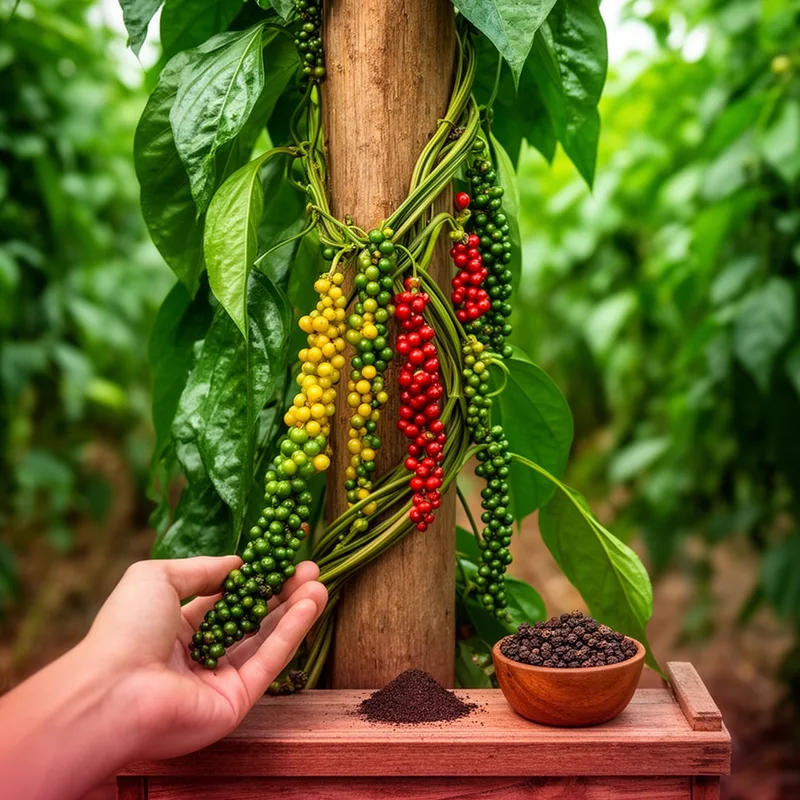
true pepper


 1
6.8
1
6.8
- noun
- /tru ˈpɛpər/
- Specialized
- The chef prefers using true pepper in his recipes.
Examples
-
The fruit of true pepper is used as a common spice in many cuisines.
-
Unlike false peppers, true pepper comes only from plants in the Piper genus.
-
Several species of true pepper are cultivated in tropical regions around the world.
-
I bought some true peppers at the farmer's market.
-
True pepper, known for its aromatic flavor, is often used to enhance the taste of various dishes.
-
Many chefs prefer using true pepper in their recipes because of its unique spice profile.
-
In tropical regions, true pepper vines climb trees and produce small berries that are harvested for spice.
Synonyms
 1
8.9
1
8.9
A group of climbing plants from warm countries that include black pepper plants

A climbing or bush plant whose small fruits are dried to make a common cooking spice

A climbing plant from warm countries whose dried berries make black pepper

A group of tropical climbing plants like the black pepper plant
Surface Forms
Morphology
The combination of 'true' (genuine) + 'pepper' (the pepper-producing vine) yields a straightforward compositional meaning of 'the genuine/real pepper plant or spice' which a B1 learner who knows both words can infer. Although botanical and somewhat technical, the adjective-noun pattern is regular and cross-linguistically common, so the sense is transparent from its parts.
Etymology
True pepper is a name used to mean the original pepper from Piper plants. Long ago, sea traders and explorers found other hot fruits and also called them 'peppers', so people began saying true pepper to show the real spice comes from Piper plants.