
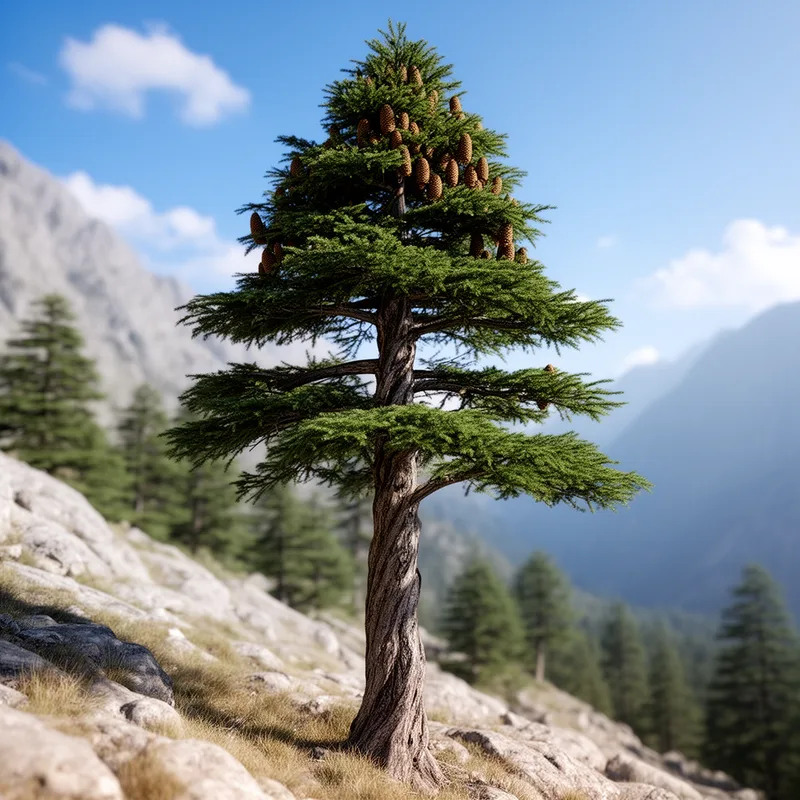
true cedar
- noun
- /tru ˈsiːdər/
- Specialized
- Many garden centers mislabel other conifers as true cedar when they are not in the genus Cedrus.
Examples
-
Himalayan true cedar is prized for its fragrant, decay-resistant wood.
-
The forest was dominated by a stand of ancient true cedar trees.
-
The true cedar is known for its aromatic wood.
-
Many true cedars grow in the Himalayas.
-
The forest was dominated by a stand of ancient true cedar trees.
-
Himalayan true cedar is prized for its fragrant, decay-resistant wood.
-
Many true cedar trees grow in the Himalayas.
Synonyms
 15
3.2
15
3.2

A large green tree that keeps its leaves all year and has pleasant-smelling wood
 1
2.8
1
2.8
A large evergreen tree with strong, fragrant wood used for furniture

A type of large evergreen tree that grows on mountains and has wood that smells nice
Surface Forms
Morphology
The phrase combines 'true' (genuine) with 'cedar' (the tree), so its meaning — an authentic/genuine cedar (i.e., a member of the genus Cedrus, as opposed to other trees colloquially called cedars) — is directly derivable from the parts. The 'true + noun' compositional pattern is common across languages, so a B1 learner who knows both constituents will readily infer this distinction.
Etymology
The noun true cedar came from a simple idea: when sellers and plant experts saw many different trees called 'cedar', they put true before cedar to show the 'real' cedar, the Cedrus trees from mountain areas. That's why true cedar today means the actual Cedrus trees, not other look-alike trees given the same name.